AbandonedNYC
abandoned
The Trapps Mountain Hamlet, Backwoods Ghost Town
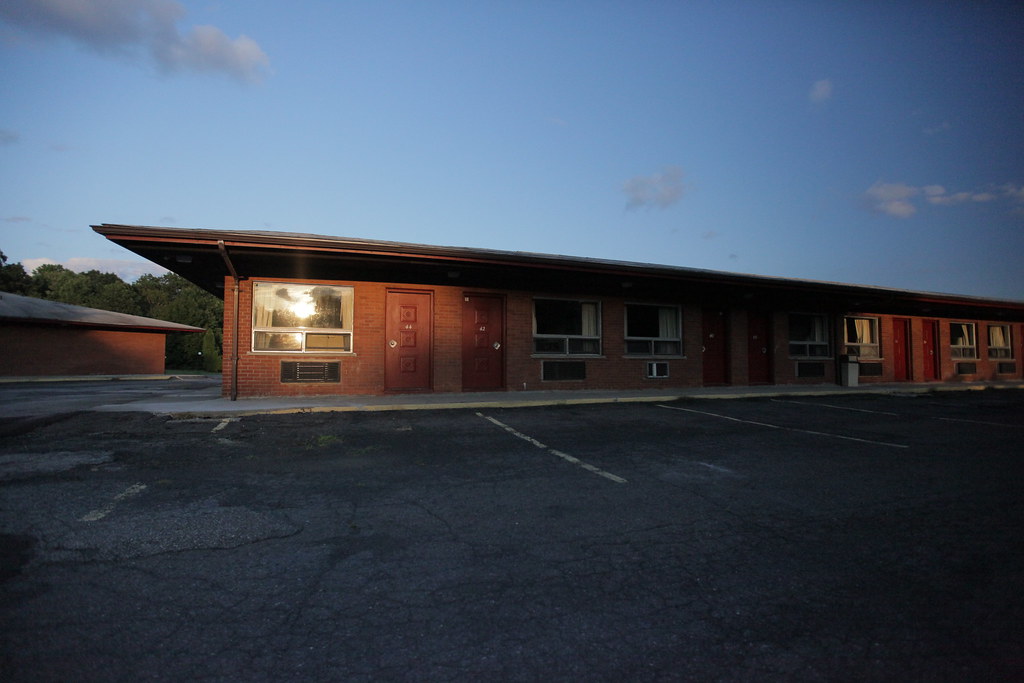
A night at the 87 Motel in New Paltz.
If you’re like me, city living can wear you down—sooner or later, you’re itching for the woods again. The sleepy college town of New Paltz offers a cheap motel and a short proximity to Mohonk Preserve, 5,000 acres of hiking trails, swimming holes, and rock scrambles nestled deep in the ancient Palisades. The world-worn hills of the Shawangunk Ridge evoke a pleasing sense of permanence to the weary New Yorker, it’s a lifetime away from the teeming avenues of Manhattan. Time seems to stand still around here, but out in these tall timbers, the ruins of a 19th century ghost town hint at a lost way of life.
The area is known for its landmark luxury resort, the Mohonk Mountain House, which has been run by the same family since it opened in 1869. True to its Quaker roots, the hotel originally banned liquor, dancing, and card playing; until 2006, it couldn’t claim a bar, and you still won’t find a TV or radio in any of the $700 a night lodgings. It may sound old-fashioned, but it’s part of a tradition in these parts—since they were first settled in the late 1700s, things have always been behind the times.
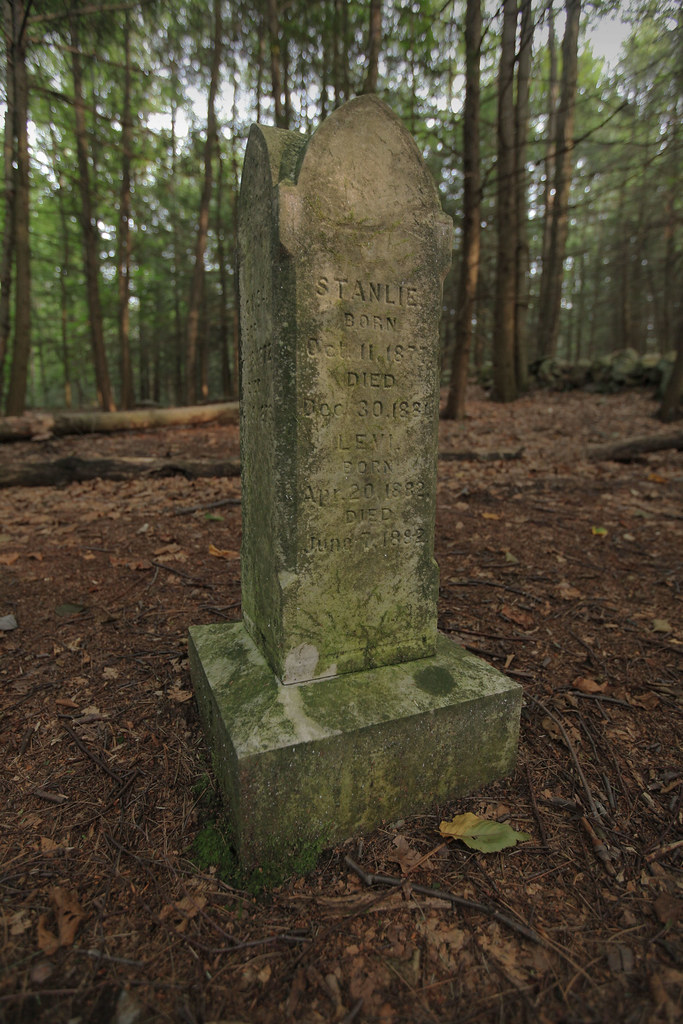
The Fowler Burial Ground.
Before the age of mountain tourism, a small subsistence community lived off this land, growing what little food the thin, rocky soil could support, raising a handful of livestock, drinking from the Coxing and Peter’s Kills. They scraped a living carving millstone out of native rock, shaving barrel hoops, and harvesting tree bark for leather tanning. In the summer, women and children joined in harvesting huckleberries, a seasonal cash crop in wild abundance at the time.
With a peak population of forty or fifty families, the settlement included a hotel, a store, a chapel, and a one room schoolhouse. Despite this progress, the population held to its old ways. So hopelessly and wonderfully at odds with the changing values of the outside world, this oldfangled hamlet didn’t stand a chance.
Starting in the late 1800s, advances in technology gradually replaced the small trades of the Trapps. Unable to sell their traditional wares, settlers found work in neighboring resorts, including the Mohonk Mountain House, building hotels and maintaining trails and carriage roads. In the late 20s, the construction of Route 44 created a short term boom in the town’s employment, but eventually led to its decline.
Many sold their property to resort owners and headed to nearby villages to find a better way of life, but one man called Eli Van Leuven stayed behind, living in a tiny plank house without running water or electricity until his death in 1956.
The Van Leuven Cabin has been lovingly restored, an unassuming monument to a largely forgotten community. Aside from this, the humble industries of the two score families that resided here have left little to mark them but shallow depressions in the ground, rubble stacked in odd arrangements, and leaf-littered tombstones. Only a settlement so bound to the earth could disappear so completely.
On the drive home, the first sighting of the Manhattan skyline elicits a kind of dull horror, signaling the inevitable return to a concrete-bound existence. As I’m plunged back into the 21st century, the scene is at once overstimulating and shockingly mundane. In that moment, I’d take an axe and a cool morning in a mountain hamlet over any day in the ad-plastered streets of midtown, but the daydreams invariably dissolve. Out of habit, obligation, or common sense, I’ll forget the plank house for the brownstone, the Coxing Kill for the coffee shop, as the stony ruins of a mountain town blanket themselves in moss.
-Will Ellis
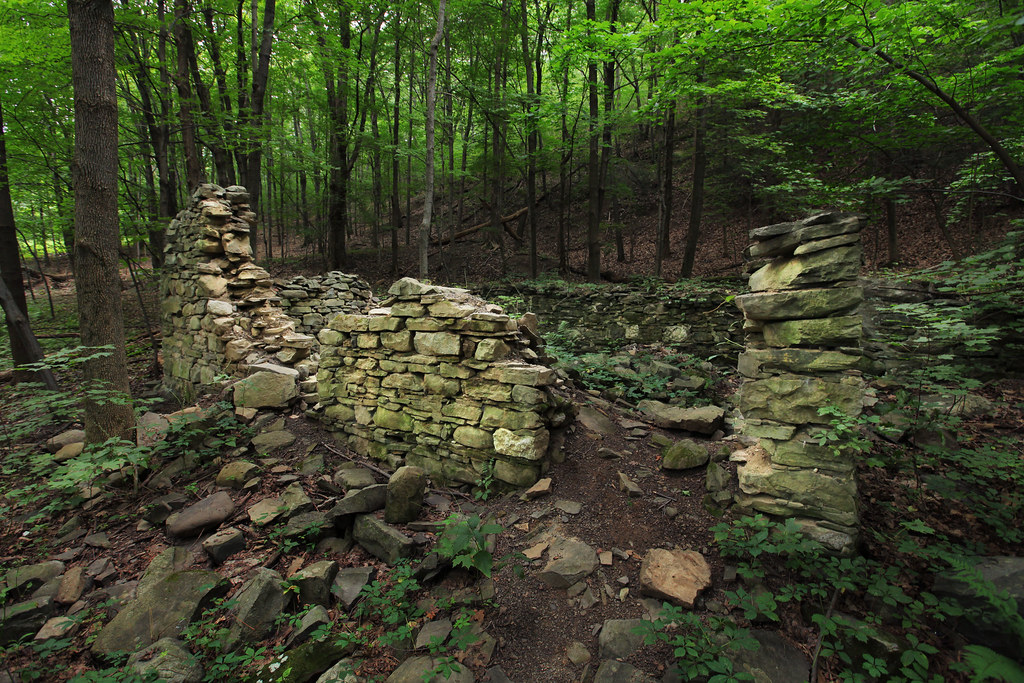
The Clearwater Ruins are some of the best preserved.
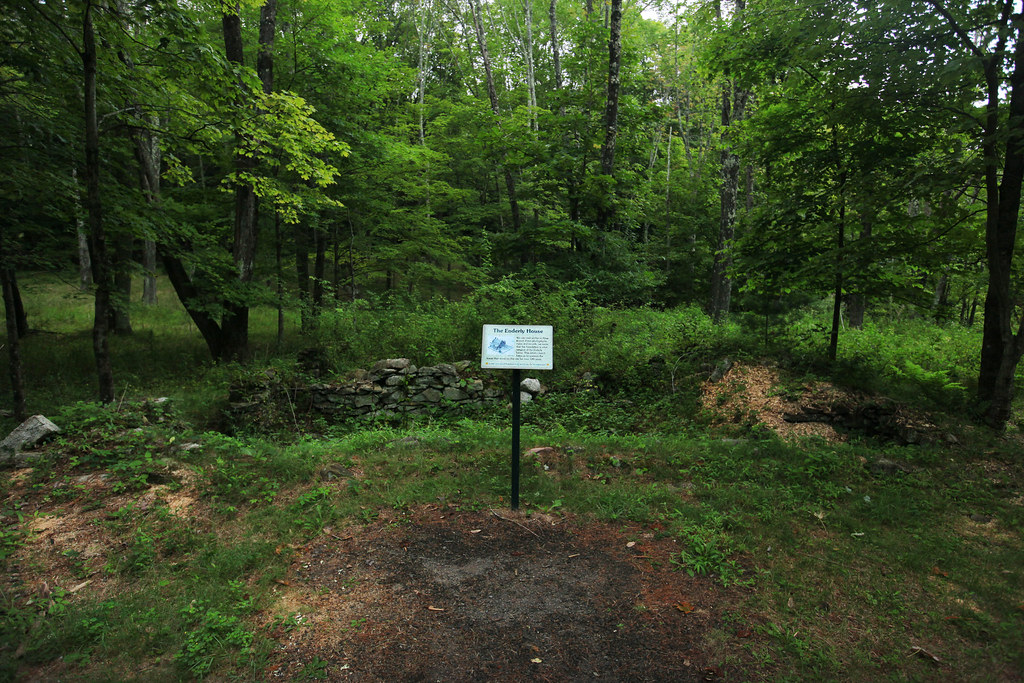
Former site of the Enderly House, most structures incorporated Native American techniques into their construction.
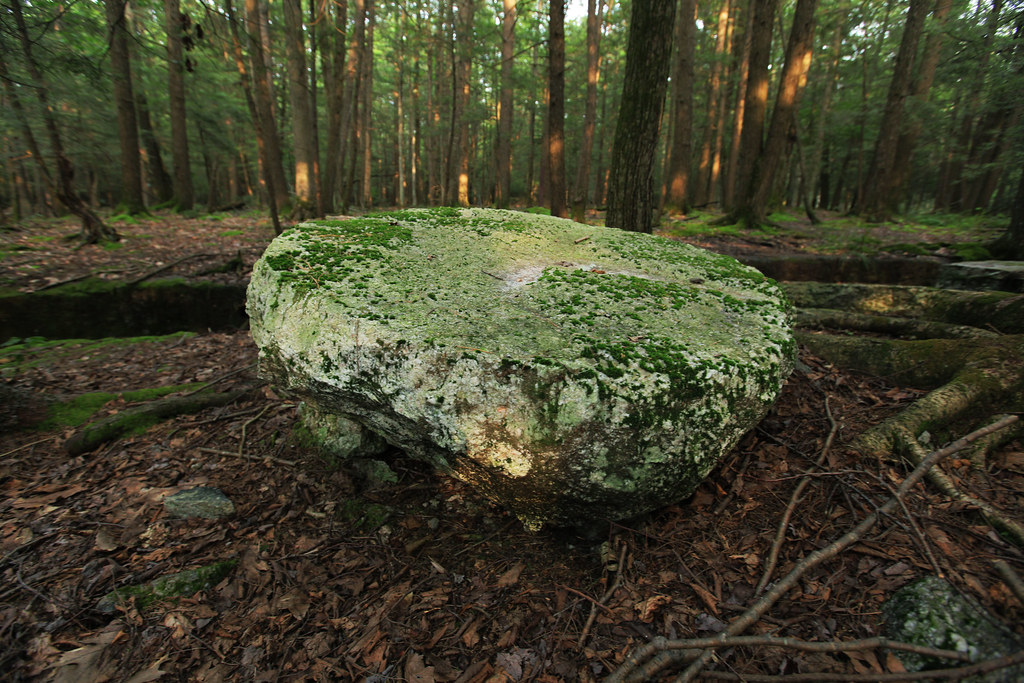
Unfinished work in the millstone quarry.

Path to the Van Leuven Cabin.
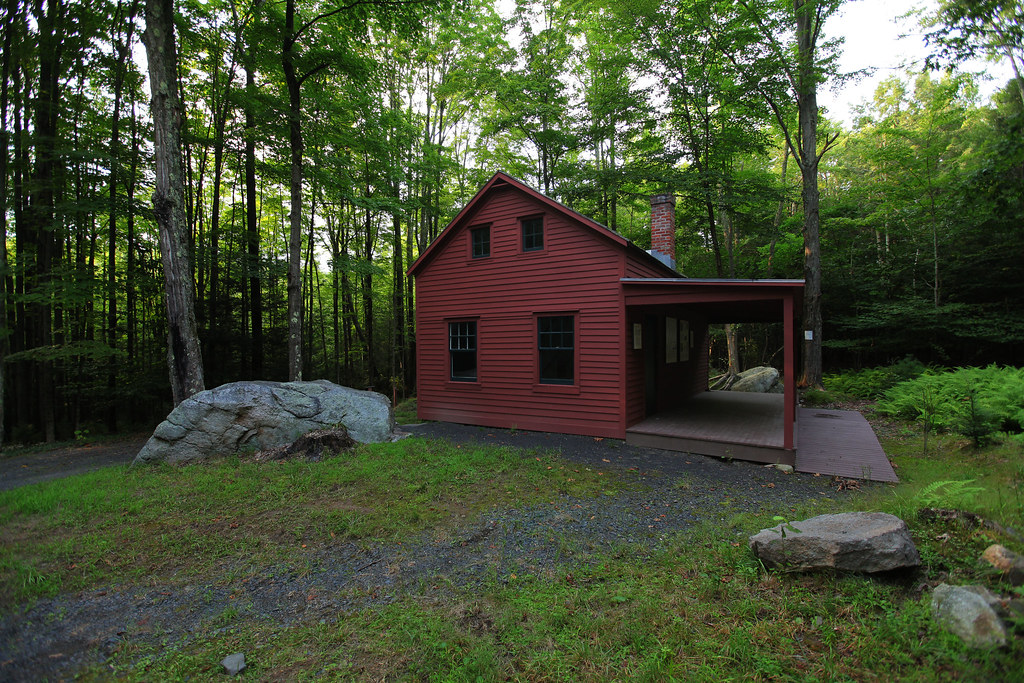
The fully restored cabin, constructed in 1889, is occasionally open for tour groups.
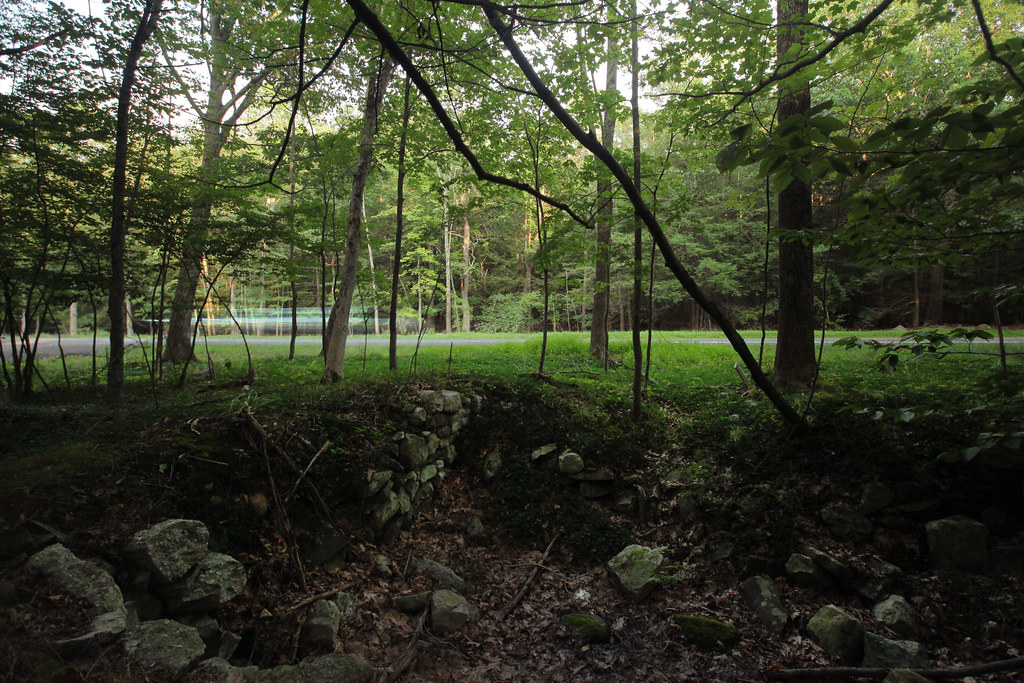
This road was built in large part by Trapps Hamlet residents. Today, it glides through the heart of the ghost town.
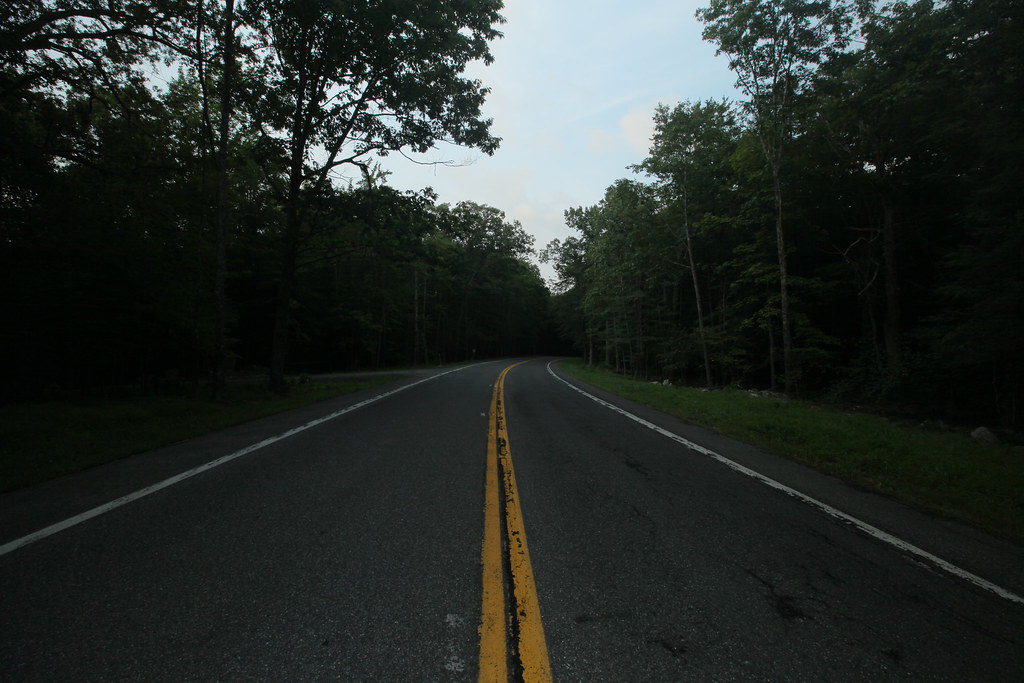
Route 44, the road to ruins.
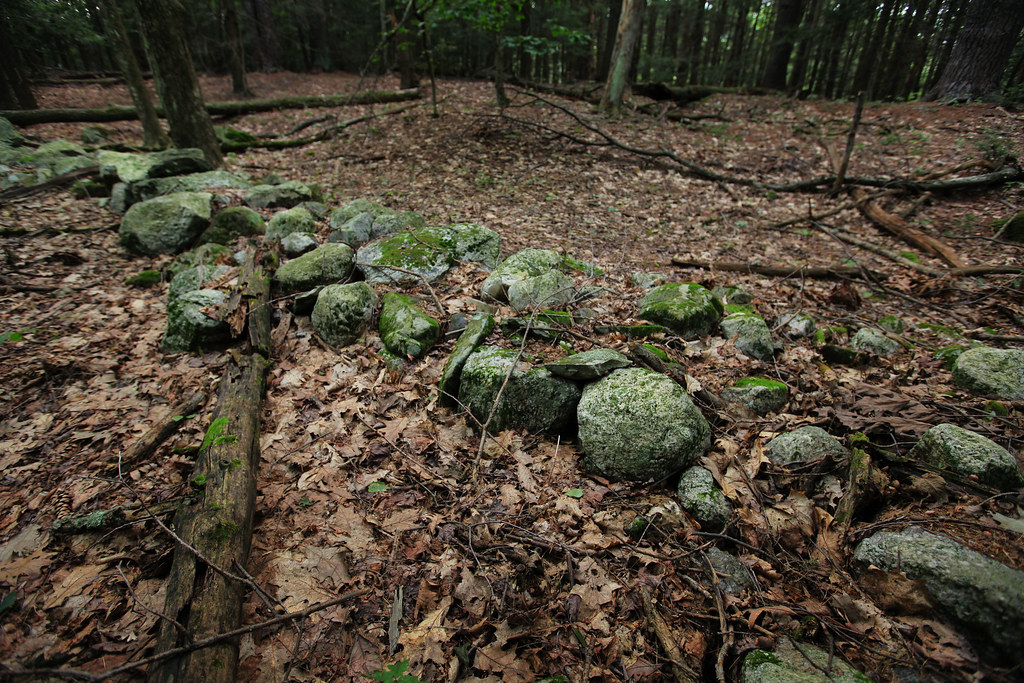
This boundary wall was used to delineate the property of Benjamin Fowler, who owned 150 acres for farming, livestock, and family use.
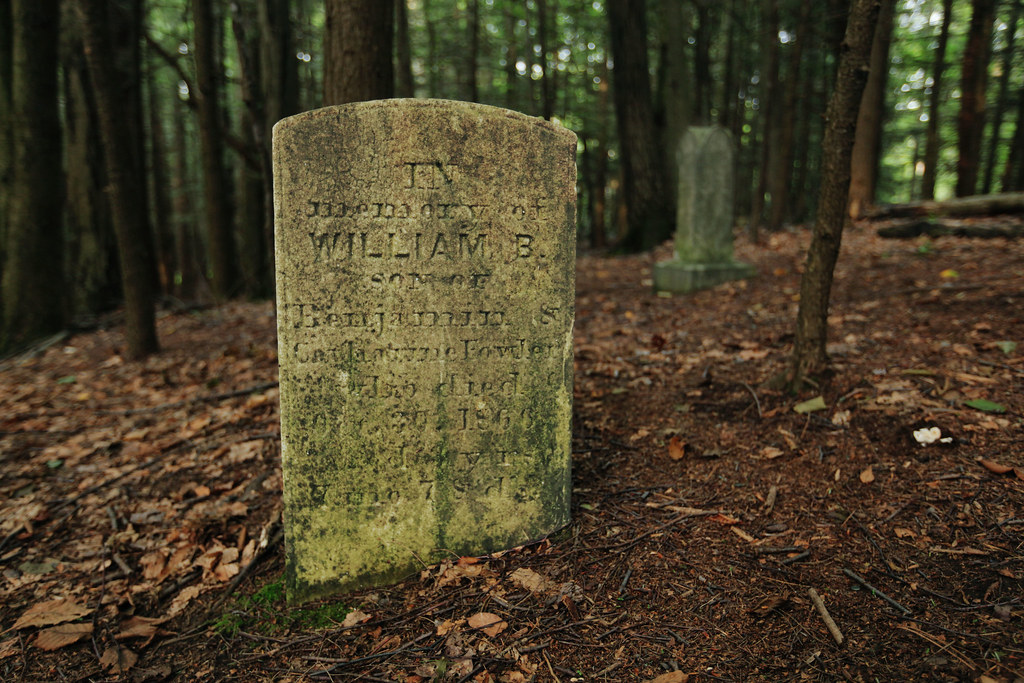
Many of Benjamin’s young children are buried in this forest plot. This grave for his son William is the earliest, dating to 1866.

The motel pond by night.
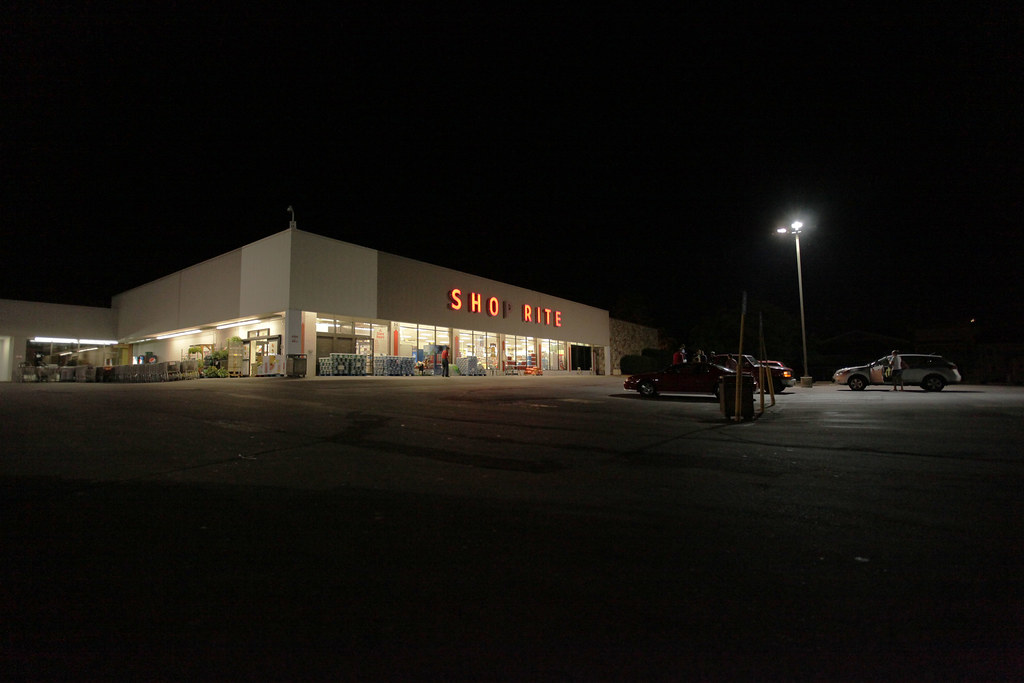
Stadium proportions of a New Paltz grocery, a far cry from the corner bodega.

At Split Rock swimming hole.
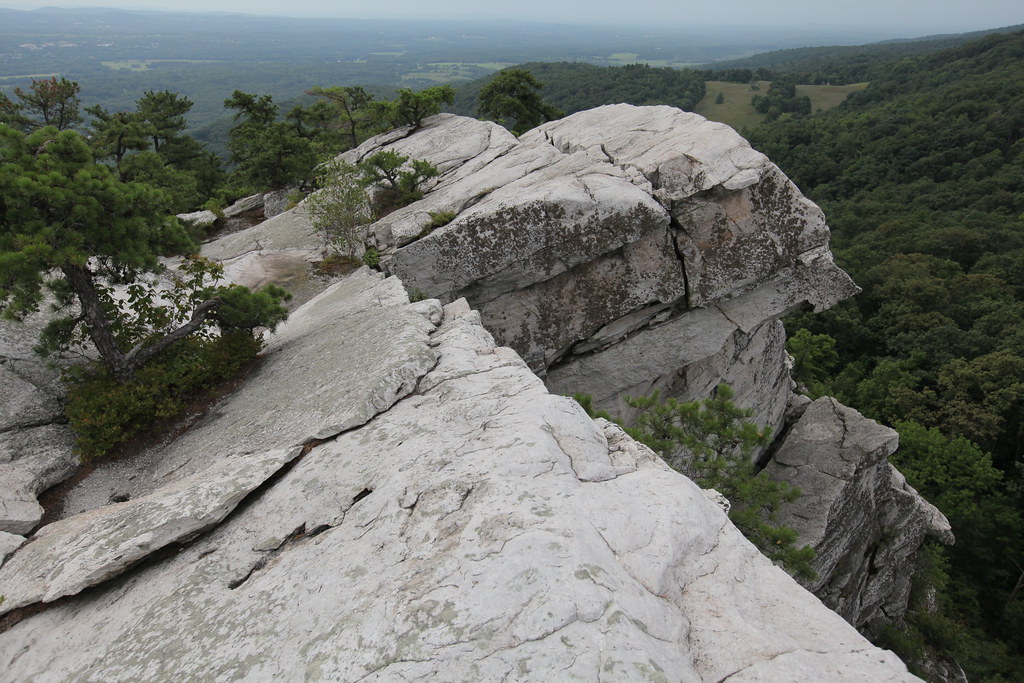
Climbing to the top of Bonticou Crag.
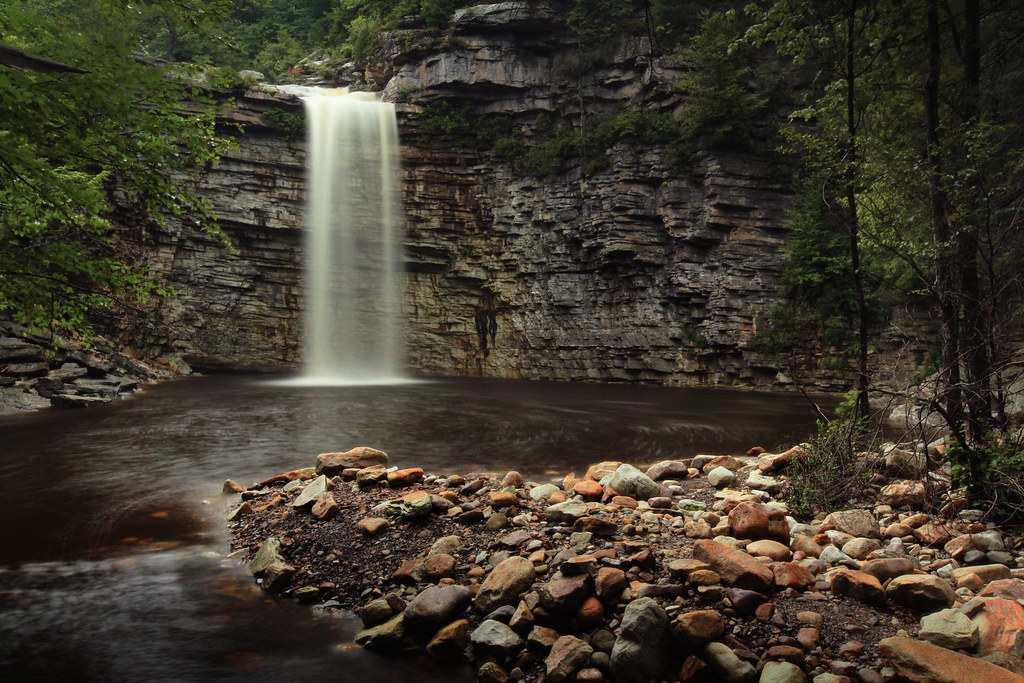
In the nearby Minnewaska State Park, the Awosting Falls swells from a mid-August downpour.
The Yonkers Power Station, Knocking at the “Gates of Hell”
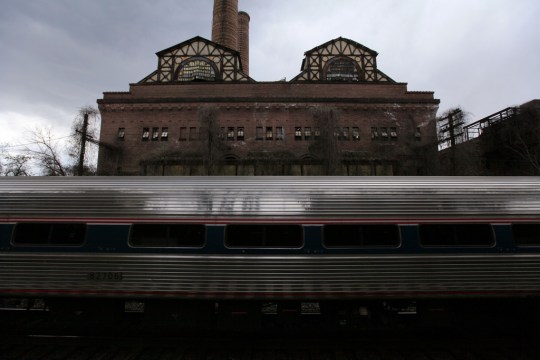
The abandoned Yonkers Power Station looms over a modern MetroNorth stop.
Take a northern train to Yonkers and watch New York City’s urban sprawl give way to the unspoiled undulations of the Hudson River Valley. You’ll be reminded once again that Manhattan is an island, bounded and formed by three rivers, and there is, in fact, a world outside of it.
One of the stranger stops along the Hudson line can’t be missed; it’s dominated by a sight nearly as impressive as the station you came from. Abandoned since the late sixties, the old power plant at Glenwood may be decidedly more ghoulish than Grand Central Terminal, but it’s almost as grand—they were dreamed up by the same architects. Once, the imposing brick edifice embodied New York City’s ever-increasing industrial prowess, but today, the riverside relic stands as a monument to obsolescence, caught in a destructive contest with the tides.
The Yonkers Power Station was completed in 1906 to enable the first electrification of the New York Central Railroad, built in conjunction with the redesign of Grand Central Terminal. The plant served the railroad for thirty years, but it soon became more cost-effective for the company to purchase its electricity rather than generate its own. Con Edison took over in 1936, using the station’s titanic generating capacity to power the surrounding county. By 1968, new technologies had replaced Glenwood’s outdated turbines, and the station was abandoned.
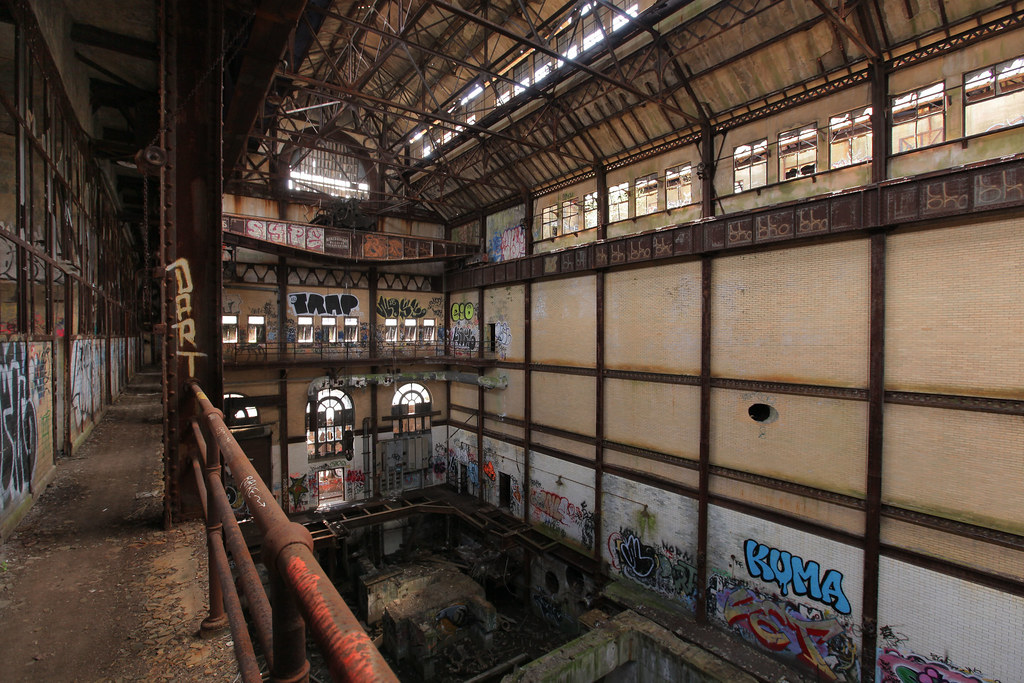
45 years later…
The Hudson River once delivered raw materials to the powerhouse, but now its waters collect in stagnant pools on the lowest level. Rust has consumed the factory from the inside out; in places, the corrosion is almost audible. Joints creak, bricks topple, ceilings drip, commingling with the constant suck of viscous mud underfoot. Most of the machinery was carried out long ago, leaving only a hulking shell rimmed with staircases, walkways, and ladders—harrowing paths to nowhere.

Avant-garde or artsy-fartsy? Aslop’s design for the station’s “preservation.”
Some of the rusted-through steps threaten to crumble at the slightest touch, giving way to a thousand foot drop through decaying metal that could land you muddied and bloodied on the swampy first floor. I can’t say it’s worth the risk, but the Grand Canyon views from the plant’s highest reaches can sure ease your mind after a nail-biting ascent. Photographers, urban explorers, and filmmakers flock here; it’s the grandeur in this decay that draws so many, and makes this place worth saving.
In 2008, Jim Bostic of the Yonkers Gang Prevention Coalition and councilwoman Patricia McDow alleged that the abandoned building was the site of brutal gang initiations, involving some 300 individuals at a time, where savage beatings and sexual deviancy took place on a shocking scale. They called for the immediate demolition of the Glenwood Power Station, referring to it by its well-established nickname, the “Gates of Hell.”

A flyer put out by McDow for a “townhouse” meeting. “Tear them down and build our children.”
The stories were thrilling, hysterical, and ultimately hard to believe. No evidence was found and no witness stepped forward that could verify the widely-publicized allegations, and the Yonkers Police Department denied having knowledge of any gang-related activities at the site.
The initiative gained the support of a number of locals, but many remained skeptical of McDow, who’s been criticized in the past for overlooking the rising tide of violent crime in her district. Demolishing this historic structure would have little to no effect on neighborhood violence, but as a symbolic gesture, it could appeal to voters.
The powerhouse was spared from the whims of city politics, but it’s technically still at risk; landmarking efforts have failed since a proposal was first put forth in 2005.
It’s been four years since the Glenwood Power Station made headlines as the “Gates of Hell,” but not much had changed there until recently. A new owner spruced up the grounds, removing overgrowth on the lot and clearing ivy from the buildings’ exteriors. It’s a sign of good things to come, though no plans for renovation have been released at this time.
I came to Yonkers a few months prior to the cleanup, unaware that the space had already been booked for a post-apocalyptic webseries shoot. The crew was friendly and professional, but their presence proved a distraction. As a buxom actress screamed “There’s no way out!” for the fifth time, the Yonkers Power Station was stripped of its mystery, seeming to wear its decay with reluctant resignation. Today, it’s a creepy backdrop for zombie films, the subject of gruesome rumors, but it was designed to inspire pride, not fear.
Sites like these are quickly becoming a contentious part of the post-industrial American landscape, scattered remnants of a period of enormous change—a revolution that’s led us, for better or worse, to where we are now. In Yonkers, one such building wades on the banks of the Hudson, its skeleton blushing to shades of orange. It’s an eyesore, a piece of history, and a community threat; also a nice spot to play hooky, take pictures, or build a shopping mall. No one can seem to agree on these “Gates.” So what the Hell should we do with them?
–Will Ellis
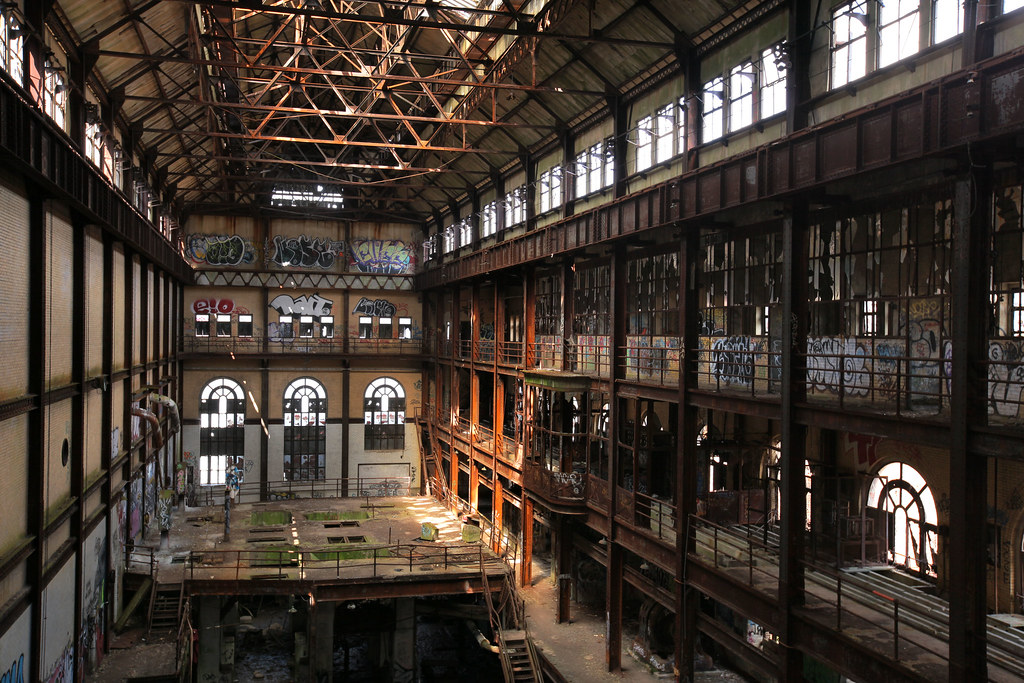
Photos can’t capture the jaw-dropping proportions of the place.
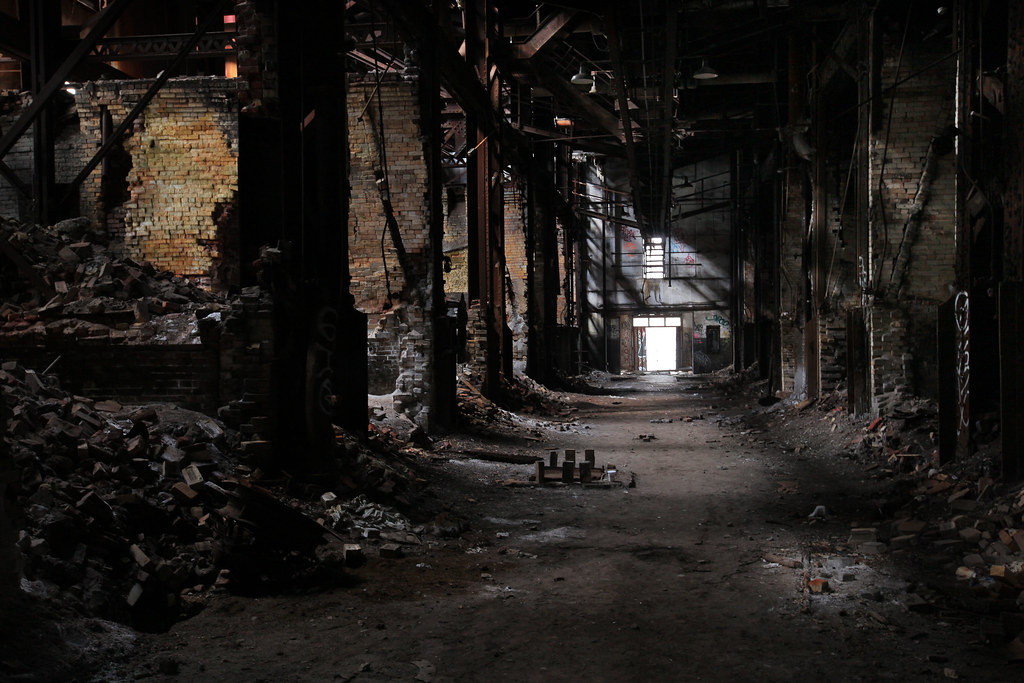
Walls reduced to rubble on the southern half of the generator building.
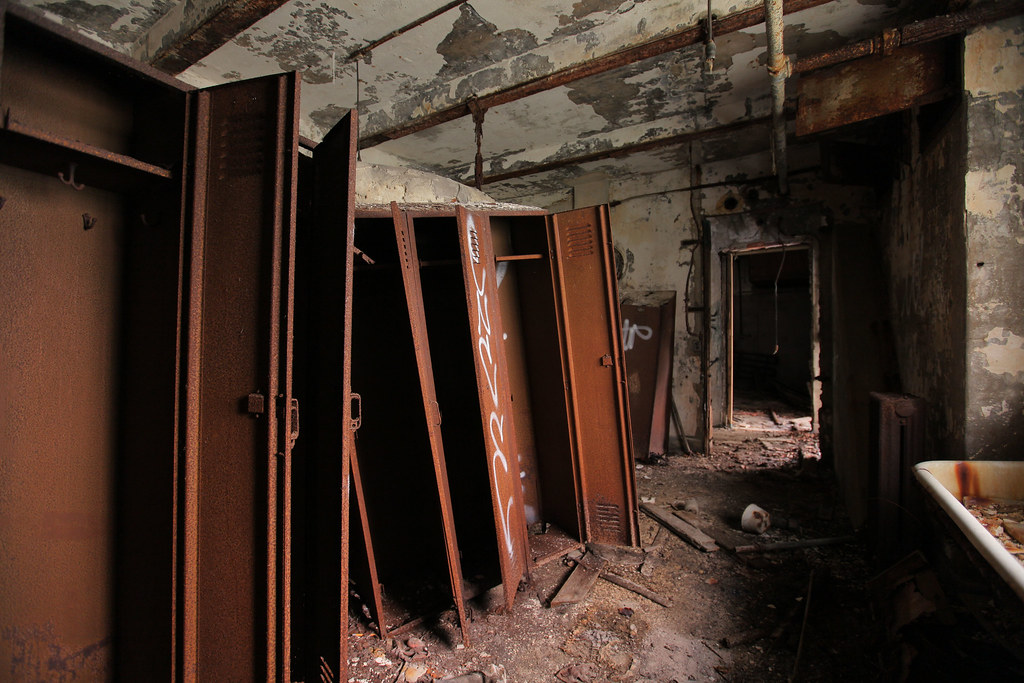
Lockers were the only hint at a human presence.

The switchboard/operating gallery overlooked the turbine room.
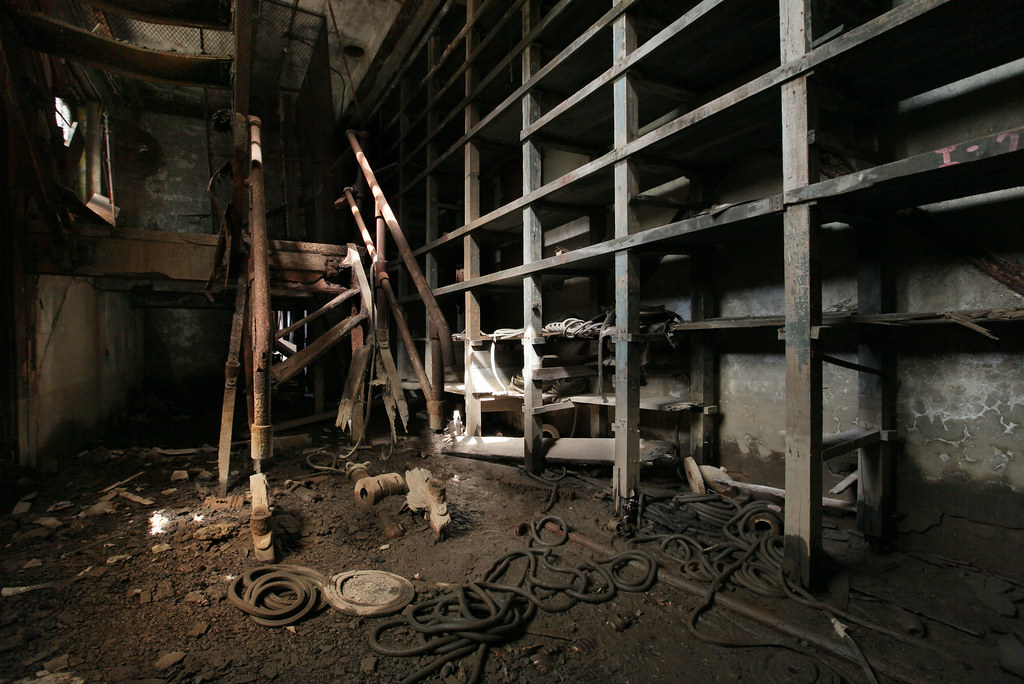
You’re off the train, but you’ve still gotta Watch the Gap on these staircases.

This basement room had the deepest water, anyone for a swim?
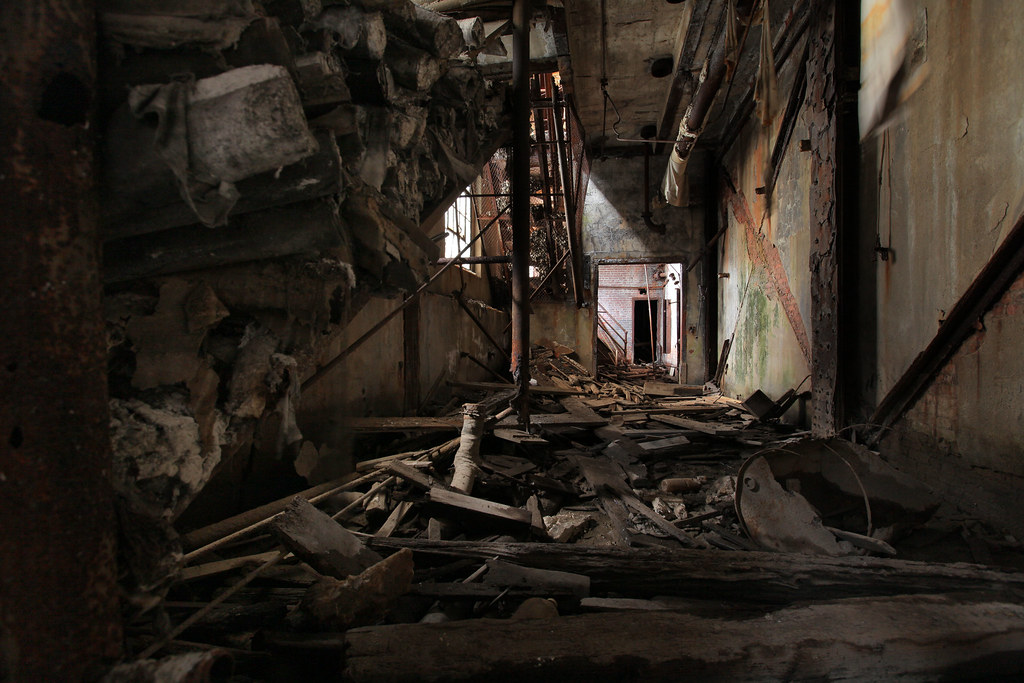
Continuing down the hallway. On the lower right, you can see a metal barrel that’s almost completely rusted through.

Turning a corner into a darkened vault, a row of valves.
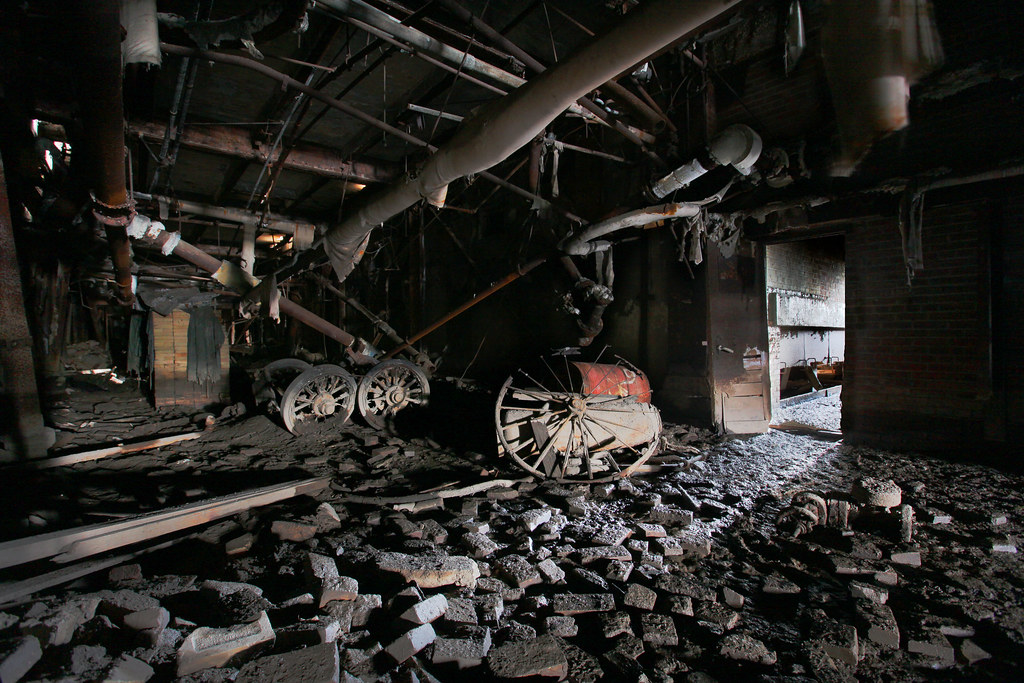
A bicycle wheel found in the deepest recesses of the powerhouse. The mud was thickest here.
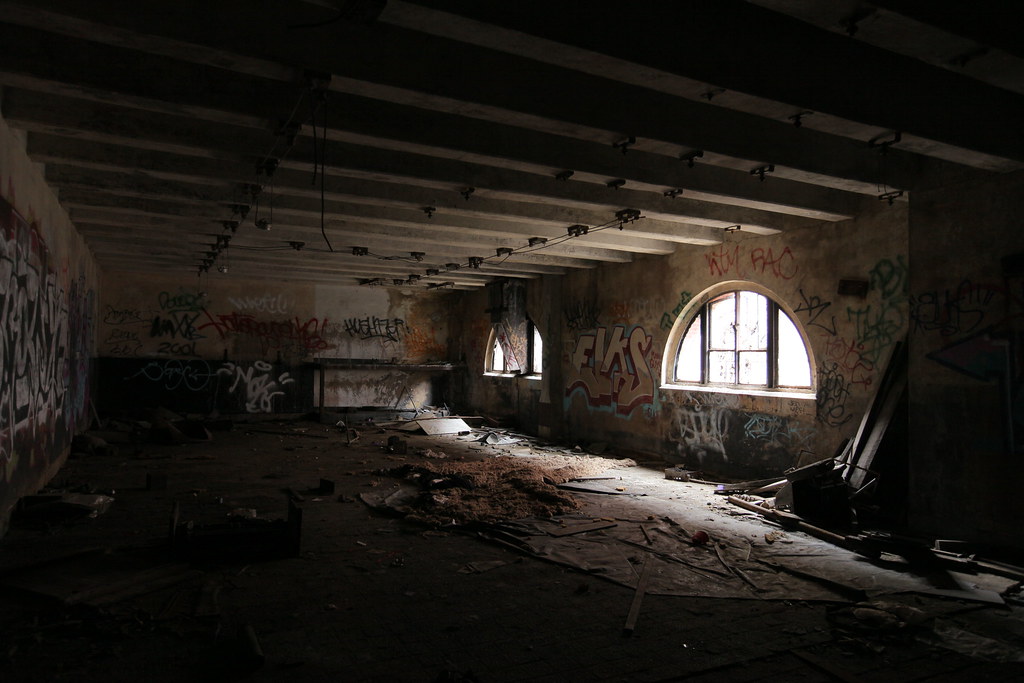
Not much to see in the site’s smaller substation building…
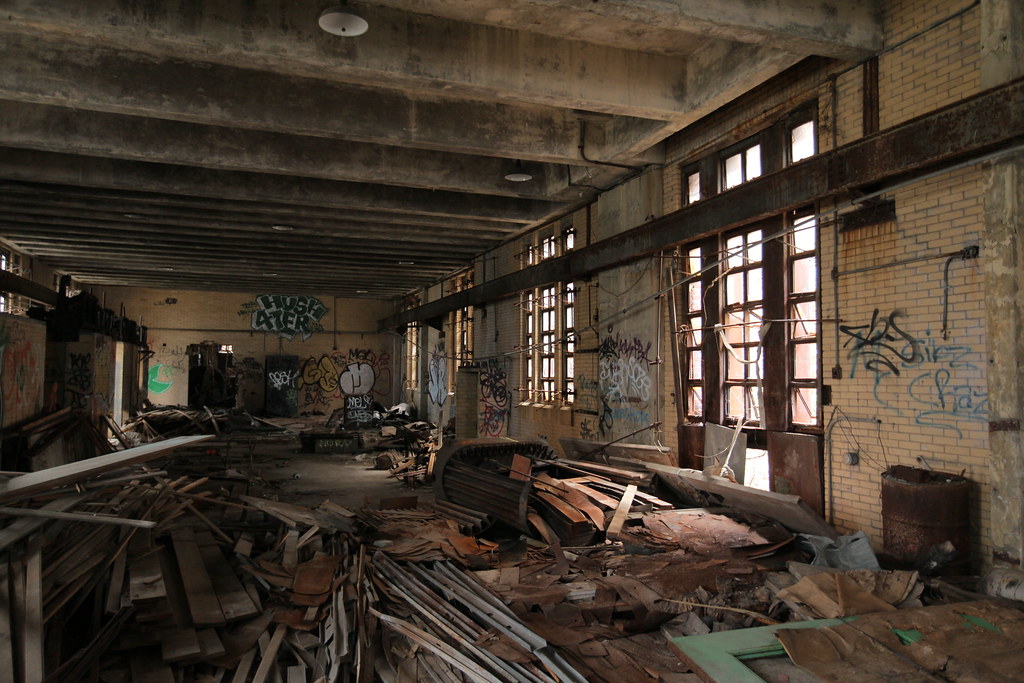
…though this floor was still filled with materials.

A view of the substation and the generating building’s iconic smokestacks.
Legend Tripping in Letchworth Village
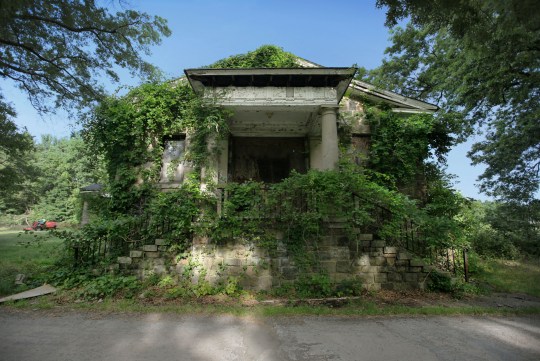
Ruins of Letchworth Village.
Letchworth Village rests on a placid corner of rural Thiells, a hamlet west of Haverstraw set amid the gentle hills and vales of the surrounding Ramapos. A short stretch of modest farmhouses separates this former home for the mentally disabled from the serene Harriman State Park, New York’s second largest. Nature has been quick to reclaim its dominion over these unhallowed grounds, shrouding an unpleasant memory in a thick green veil. Abandonment becomes this “village of secrets,” intended from its inception to be unseen, forgotten, and silent as the tomb.
Owing to its reputed paranormal eccentricities, Letchworth Village has become a well-known subject of local legend. These strange tales had me spooked as I turned the corner onto Letchworth Village Road after a suspenseful two-hour drive from Brooklyn. Rounding a declining bend, I caught my first glimpse of Letchworth’s sprawling decay—some vine-encumbered ruin made momentarily visible through a stand of oak. Down the hazy horseshoe lanes of the boy’s ward, one by one, the ghosts came out.
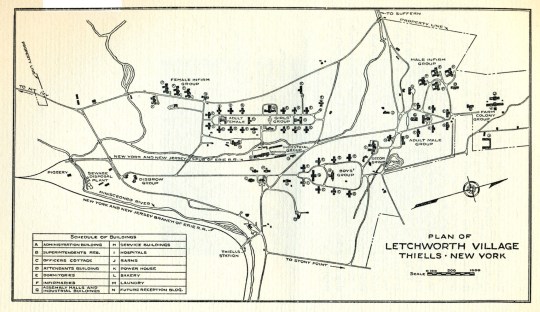
This map gives a sense of scale. Most of these buildings still stand, altered or abandoned.
By the end of 1911, the first phase of construction had completed on this 2,362 acre “state institution for the segregation of the epileptic and feeble-minded.” With architecture modeled after Monticello, the picturesque community was lauded as a model institution for the treatment of the developmentally disabled, a humane alternative to high-rise asylums, having been founded on several guiding principles that were revolutionary at the time.
The Minnisceongo Creek cuts the grounds in two, delineating areas for the two sexes which were meant never to mingle. Separate living and training facilities for children, able-bodied adults, and the infirm were not to exceed two stories or house over 70 inmates. Until the 1960s, the able-bodied labored on communal farms, raising enough food and livestock to feed the entire population.

1933 photo of Letchworth Village’s Girl’s Group
Sinister by today’s standards, the “laboratory purpose” was another essential tenet of the Letchworth plan. Unable to give or deny consent, many children became unwitting test subjects—in 1950, the institution gained notoriety as the site of one of the first human trials of a still-experimental polio vaccine. Brain specimens were harvested from deceased residents and stored in jars of formaldehyde, put on display in the hospital lab. This horrific practice has become a favorite anecdote of ghost-hunters and adolescent explorers.
The well-intentioned plans for Letchworth Village didn’t hold up in practice, and by 1942, the population had swelled to twice its intended occupancy. From here, the severely underfunded facility fell into a lengthy decline. Many of the residents, whose condition necessitated ample time and attention for feeding, became seriously ill or malnourished as a result of overcrowding. At one point, over 500 patients slept on mattresses in hallways and dayrooms of the facility, meagerly attended by a completely overwhelmed staff tasked with the impossible.
Having discontinued the use of the majority of its structures, and relocated most of its charges into group homes, the institution closed down in 1996 as old methods of segregating the developmentally disabled were replaced with a trend toward normalization and inclusion into society. The state has made efforts to sell the property, with mixed results. Most of the dilapidated structures were slated for demolition in 2004 to make way for a 450-unit condo development, but the plan has evidently been put on hold. Ringed with ballfields and parking lots, shiny Fieldstone Middle School makes use of nine buildings of the former girl’s group, an island of promise in a landscape of failure.
Off Call Hollow Road, a new sign has been erected pointing out the “Old Letchworth Village Cemetery.” Down a seldom-traveled path, an unusual crop of T-shaped markers congregate on a dappled clearing. They’re graves, but they bear no names.
Few wished to remember their “defective” relatives, or have their family names inscribed in such a dishonorable cemetery—many family secrets are buried among these 900 deceased. Here, in the presence of so many human lives devalued, displaced, and forgotten, the sorrow of Letchworth Village is keenly felt.
As part of a movement taking place across the country, state agencies and advocates funded the installation of a permanent plaque inscribed with the names of these silent dead, and a fitting epitaph: “To Those Who Shall Not Be Forgotten.”
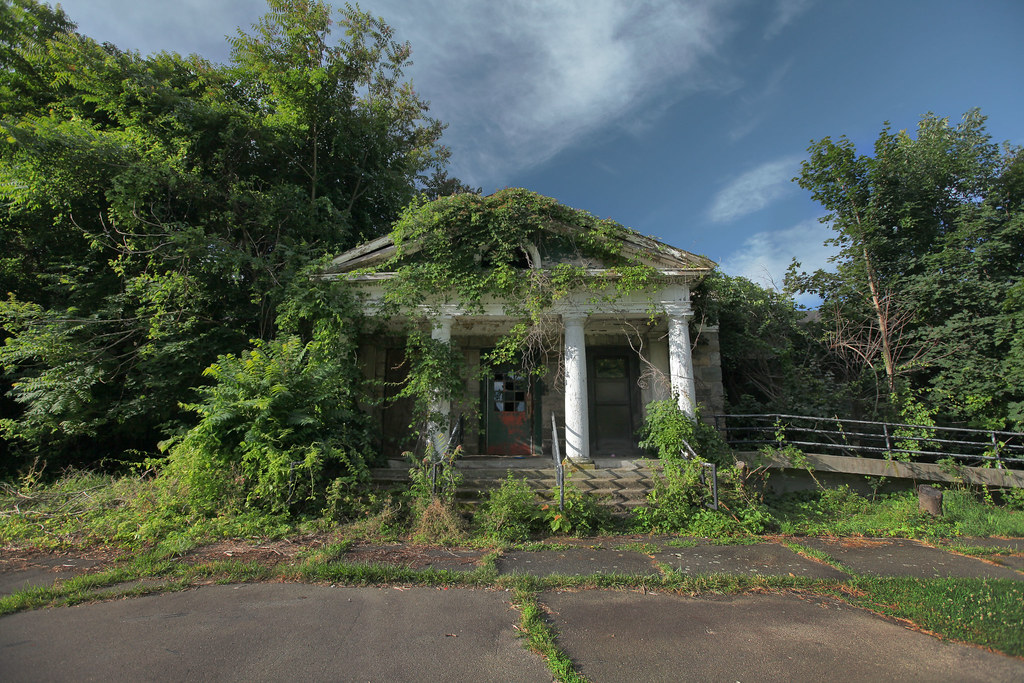
Each of the six groups of buildings included eight small dormitories.

The hospital, north of the boy’s group, is known as Letchworth Village’s most haunted building.

Evidence of last night’s joyride on the hospital lawn.
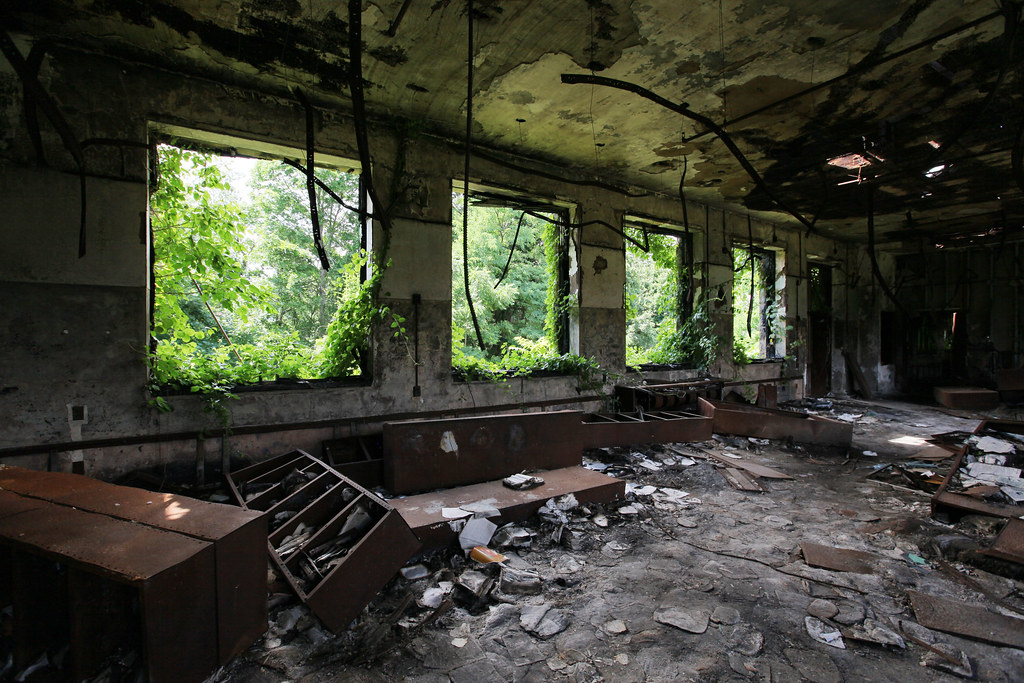
A dayroom library fueled the flames of an arson attempt.
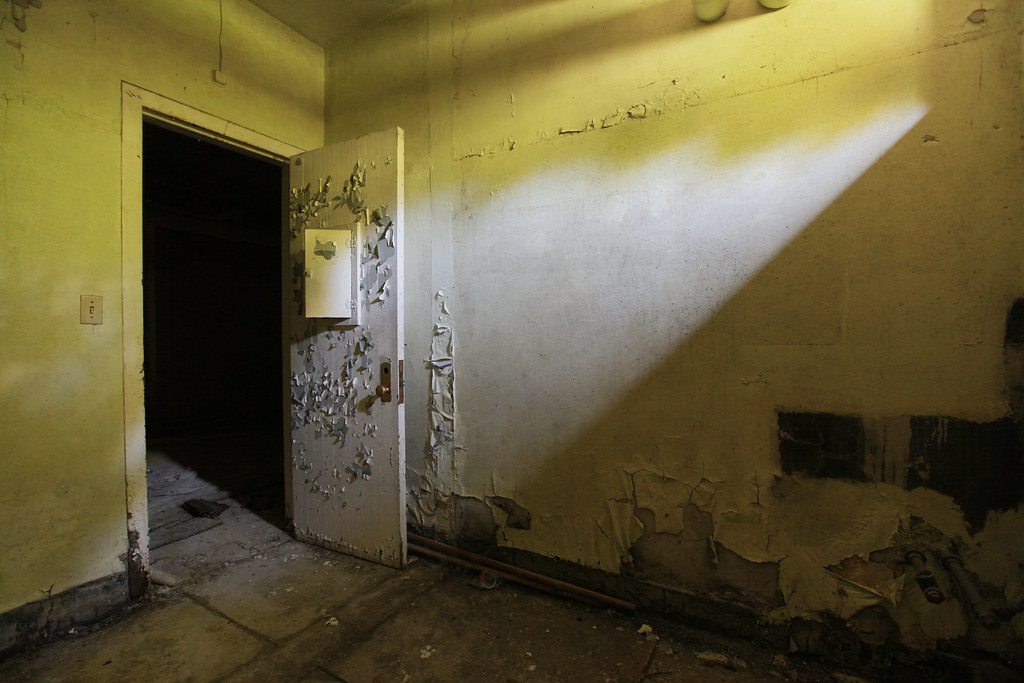
A small basement nook of unknown purpose, this was the only door of its kind.
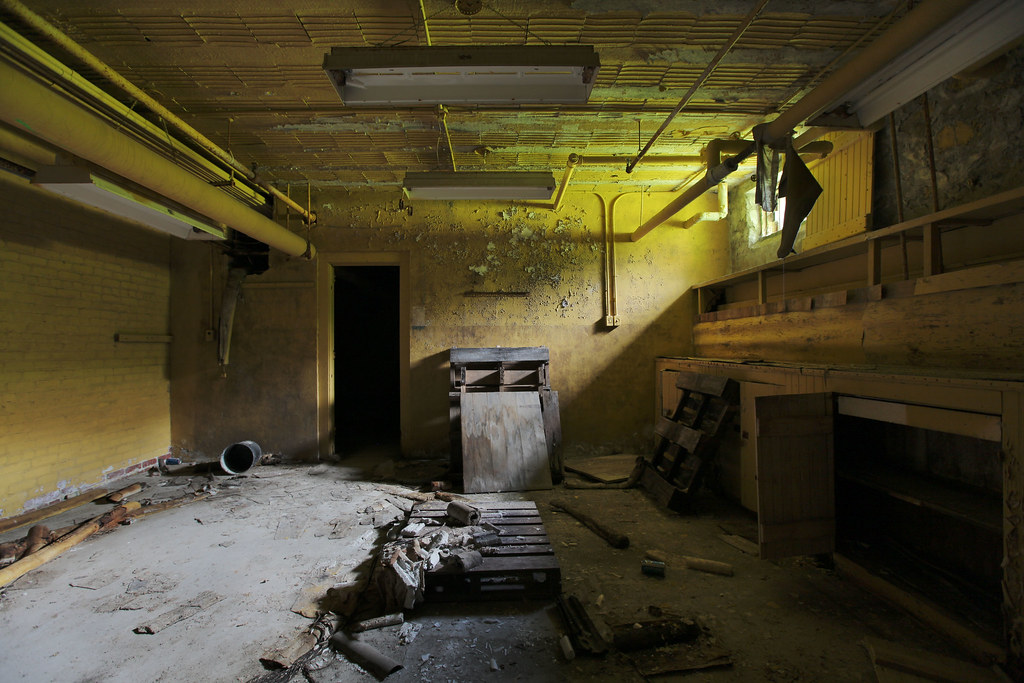
A storage area in the basement of Letchworth Village.
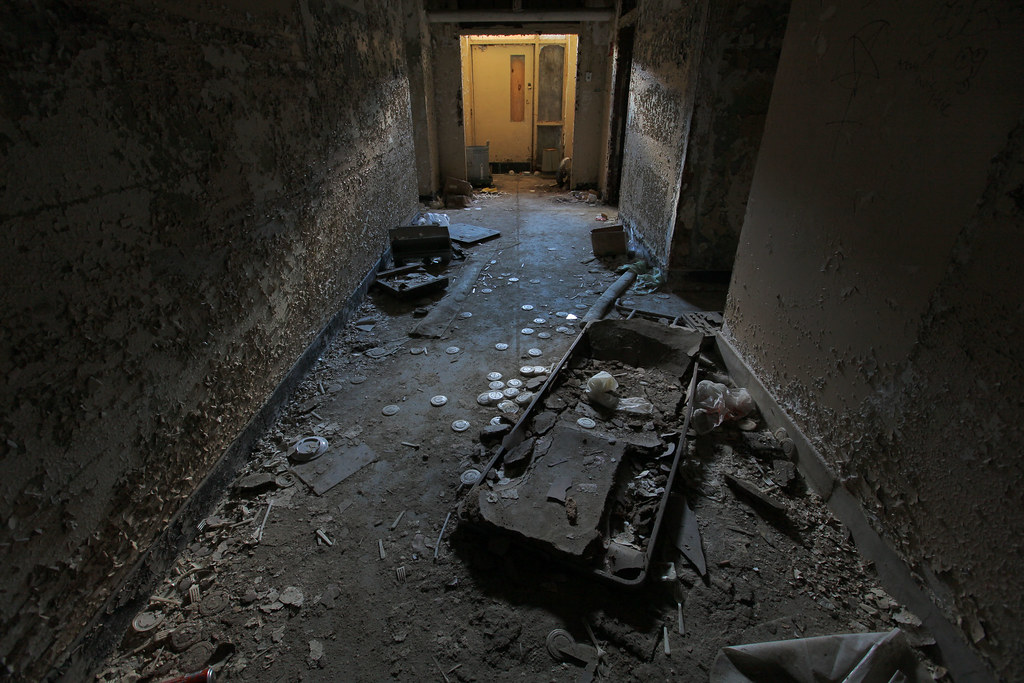
An adjacent room was filled with hospital plasticware, some overflowed into this darkened hallway.

A renegade paintball game left a gruesome mark on this room.
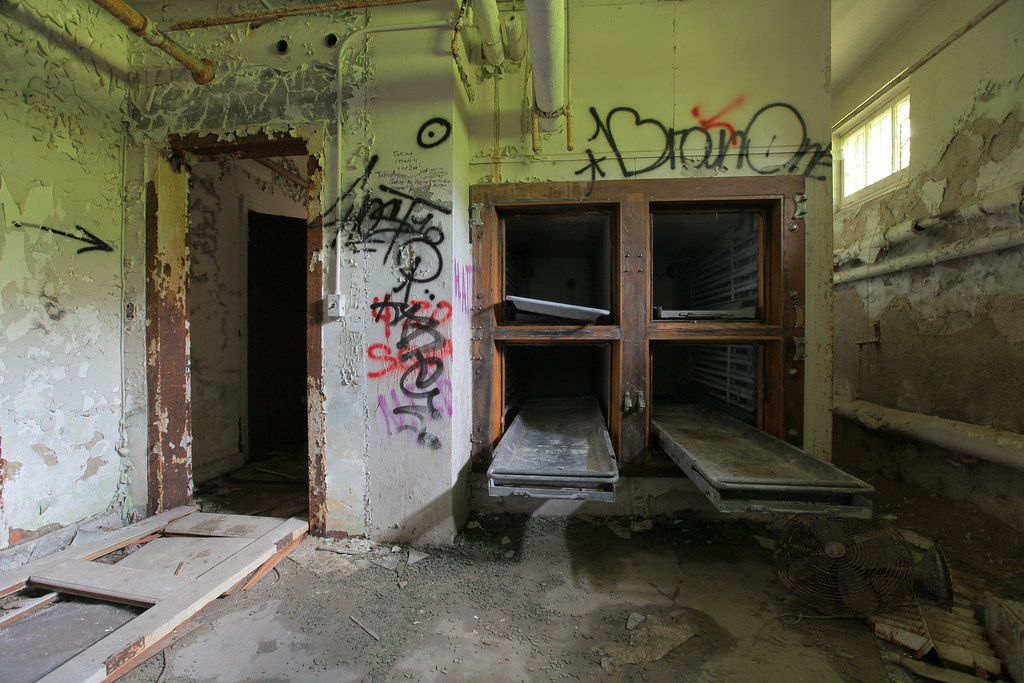
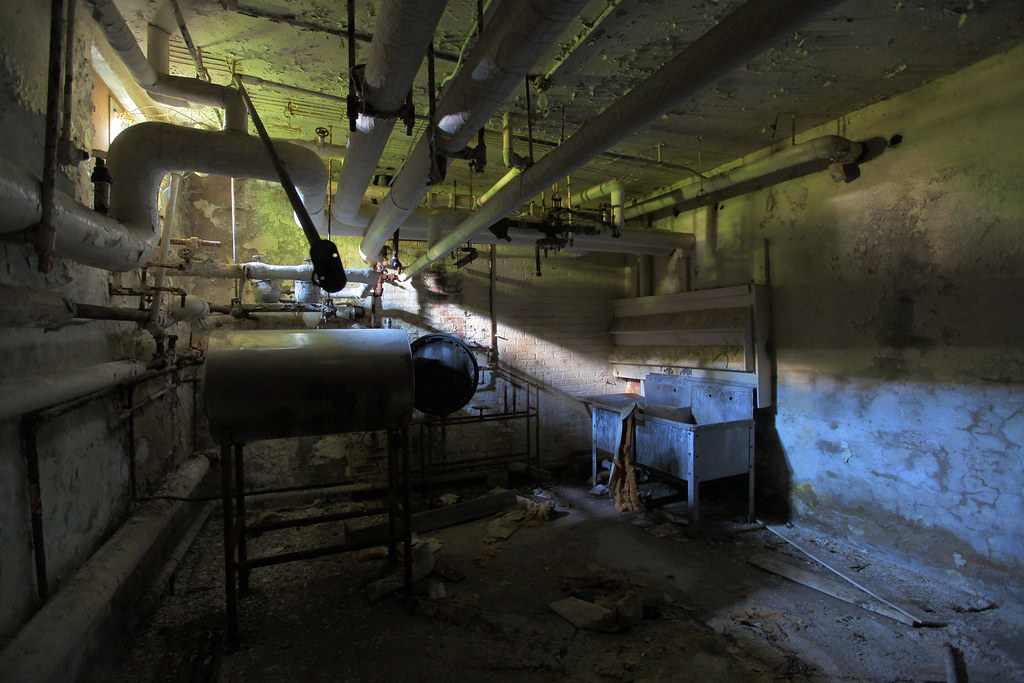
Cold storage. The first room I came across in Letchworth Village, a morbid introduction.
Moments after taking this photo, a group of young explorers entered through a side door. I gave them quite a scare.
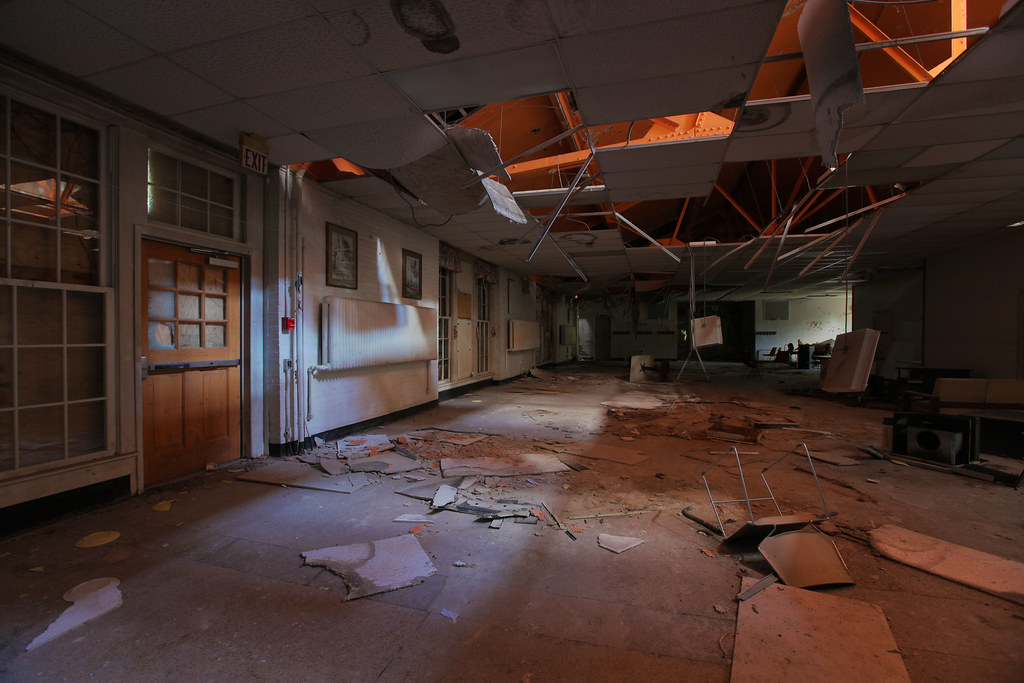
A dining hall is brought to light as its ceiling crumbles.
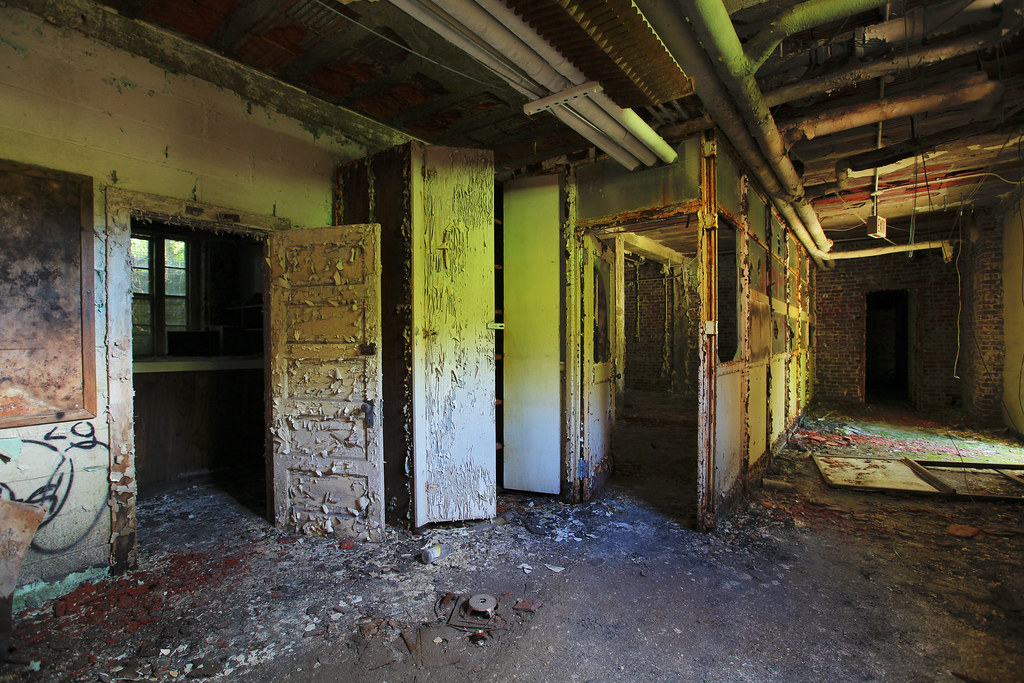
The top floor of Stewart Hall has been thoroughly razed, but the bottom remains mostly intact.
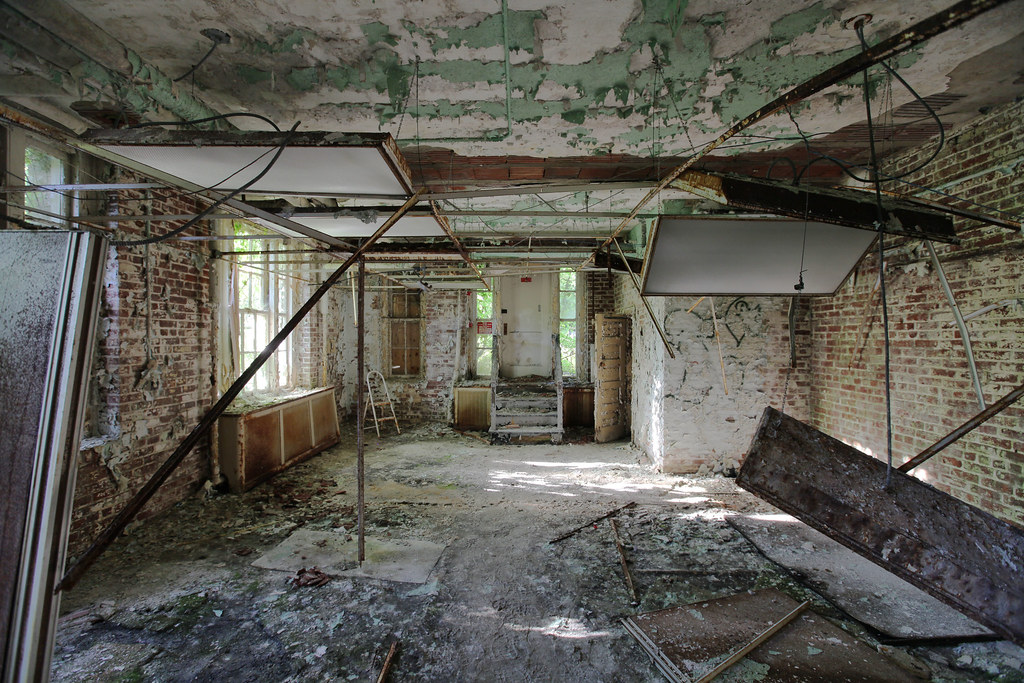
Fire damage visible on the lower floor.
A strange camera malfunction lasted the entire time I was in this building and stopped the moment I stepped out. It’s the closest I came to a paranormal experience.
Many of the cheaply made service buildings were in a similar state.

Even in broad daylight, the place is eerie. Here, an ominous administration building.

Better late than never, a monument to Letchworth’s dead.
Inside Harlem’s P.S. 186
Dawn breaks in a crumbling classroom.
School’s out forever; at least at P.S. 186. This aging beauty has loomed over West Harlem’s 145th Street for 111 years—but it’s been vacant exactly a third of that time. The Italian Renaissance structure was considered dilapidated when it shuttered 37 years ago, and today its interiors feel more sepulchral than scholastic.

Nature reclaims the school’s top floor.
Windows gape on four of its five stories, exposing classrooms to a barrage of elements. Spongy wood flooring, wafer-thin in spots, supports a profusion of weeds. Adolescent saplings reach upward through skylights and arch through windows. They’re stripped of their foliage on this unseasonably warm February morning, lending an atmosphere of melancholy to an already gloomy interior. Infused with an odor not unlike an antiquarian book collection, upper floors harbor a population of hundreds of mummified pigeon carcasses—the overall effect is grim. You’d never guess this building had an owner, but sure enough…
The site was purchased in 1986 by the nonprofit Boys and Girls Club of Harlem for $215,000 under the condition that new development would be completed within three years. After several decades of inactivity, the group introduced a redevelopment plan that called for the demolition of P.S. 186 and the construction of a 200,000 sq. ft. mixed-use facility with affordable housing, commercial and community space, and a new public school…
News of the school’s demolition mobilized area residents to save the structure. A series of local petitions and letter-writing campaigns championed the preservation of P.S. 186, and gained the support of the New York Landmarks Conservancy, though a landmark bid was blocked at a 2010 community board meeting. At the time, owners insisted that rehabilitating the decrepit building was a financial impossibility.
In a surprising turn of events, the BGCH recently downsized the plan in favor of preservation. The school will be renovated into 90 units of affordable housing and a new Boys and Girls Club.
It’s a rare victory for preservationists, and an unlikely one given the school’s history—when the building was last in use, community members wanted nothing more than to see the place razed.

From the New York Times Archives, NEGRO officials take over P.S. 186.
In addition to generally run-down conditions, safety became a major concern at P.S. 186 in its final years. The H-shaped design allegedly had the potential to trap “hundreds of children and teachers” in the event of a fire. Doors on the bottom floor were to remain open at all times to keep the outdated floor plan up to code, leaving the building completely vulnerable to neighborhood crime.
According to the school’s principal at the time, “parents have been robbed in here at knife point, and people…use this building as a through-way.” In a 1972 incident, two youths, including the 17-year-old brother of a 5-year-old P.S. 186 student, broke into room 407 and raped a teacher’s aide at gunpoint.
Increasing community concern reached a boiling point earlier that year when 60 members of the African American empowerment group NEGRO (National Economic Growth and Reconstruction Organization) moved into the school to call for an evacuation of 600 students on the top three floors.
The stunt caught the attention of the Fire Department, who toured the school later that week. A deputy chief “didn’t see any real hazardous problem,” but was forced to evacuate the remaining 900 students when he was unable to activate the fire alarm. Inspectors discovered that wires leading out of the alarm system had been cut, although a school custodian claimed that the alarm system had worked during a routine test at 7:30 that morning.
By 1975, funding was at last approved for a replacement school, and much to the relief of parents, plans were put in place for the immediate demolition of the aging fire trap. Who could predict that thirty-seven years later P.S. 186 would be getting a second chance?

The ground floor.
A few decades ago, this school was described as “antiquated,” “unsafe,” and “plain,” but today, it’s called “historic,” “magnificent,” and “beautifully designed.” This reversal illustrates the complex relationship we New Yorkers have with our buildings, and begs the question: what might the the thousands of old structures we see torn down every year have meant to us in a century?
It’s been a few months since I’ve set foot in the building, and today the visit feels like a half-remembered dream.
To keep vagrants out, cinderblocks had been installed in almost every window and door of the bottom floor. It looked too dark to shoot—but as my eyes started to adjust, I saw that light was finding its way in. Through every masonry crack and plaster aperture, bands of color projected onto decaying classrooms, vibrant variations on a pinhole camera effect. Past a vault inexplicably filled with tree limbs, a hall of camera obscuras each hosting an optical phenomenon more bewitching than the last. P.S. 186 is largely considered an eyesore in its current state, but who could deny that its interior is a thing of beauty?
However photogenic, this decay does little good for its underserved community—it’s the sort of oddity this city doesn’t have room for. Here’s a look inside, before we turn the page on what’s destined to be the most colorful chapter in the controversial, and continuing, history of this unofficial Harlem landmark.
-Will Ellis

Decaying seats in the auditorium.
The view from center stage.
Behind flaking slate chalkboards, pencilled measurements dating to their original installation in the early 1900s.

Buckling floors in this classroom were in relatively good condition.

…Some areas of the top floor nurtured a fledgling arboretum.

The damaging effects of water put on display in a weedy gymnasium.
An exit still clearly marked.
One of hundreds of pigeon carcasses found throughout the building.

From the entrance.

View of the east wing.

A ravaged classroom on the top floor..
…and an identical room 5 stories down.
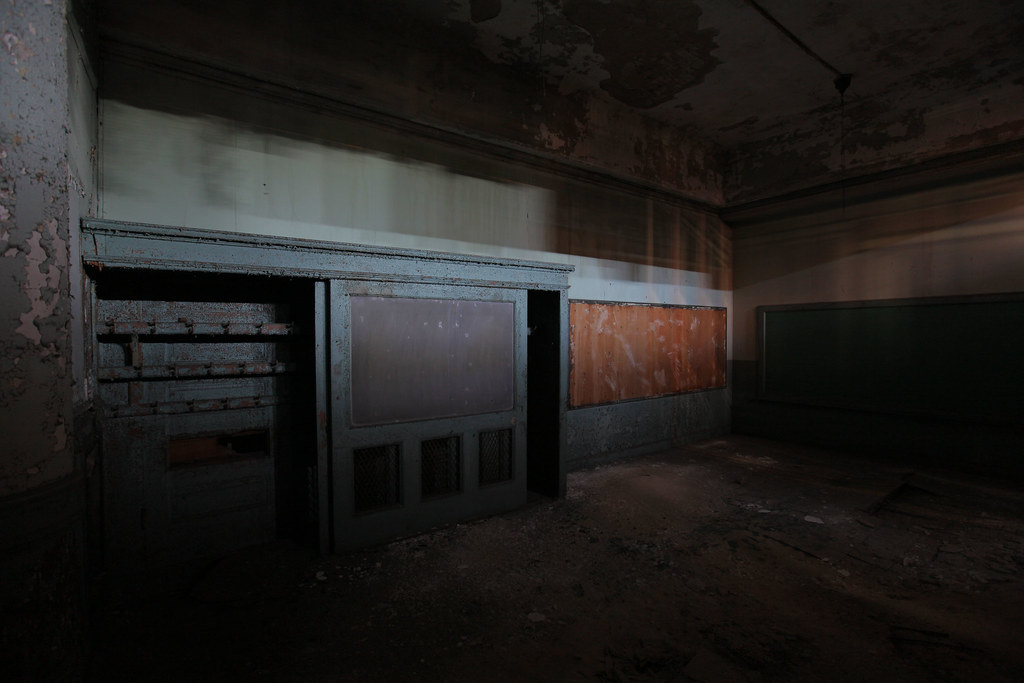
Ominous light on the bottom floor of P.S. 186.

A certain slant of light gives this room the look of an unholy nativity.

Rubble collects on the ground floor.
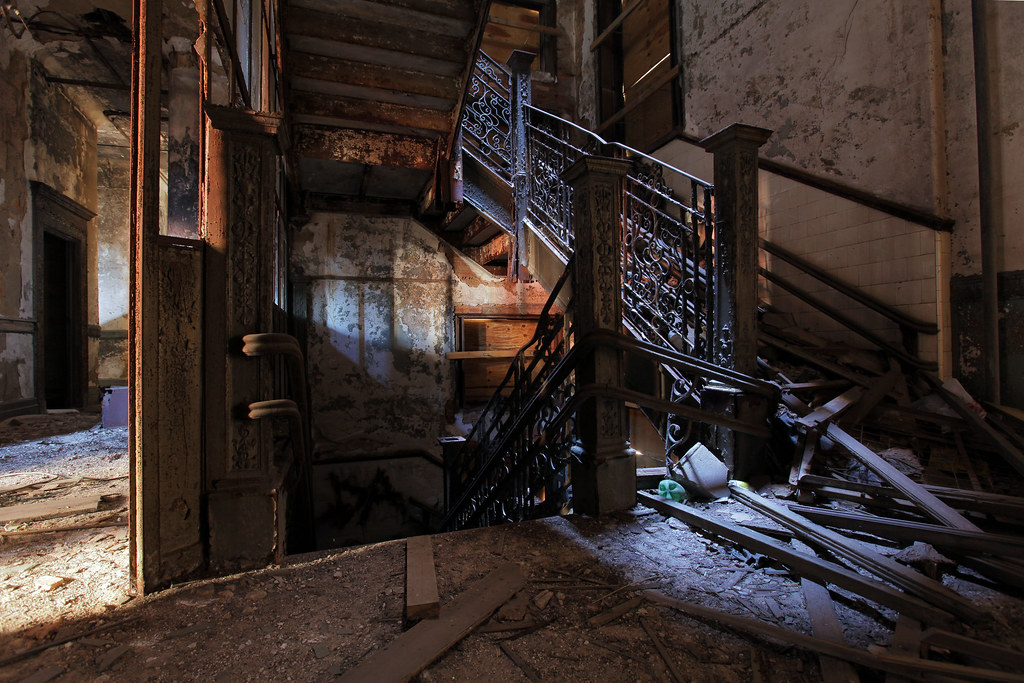
Blue skies reflect three stories down onto a grand staircase littered with debris.
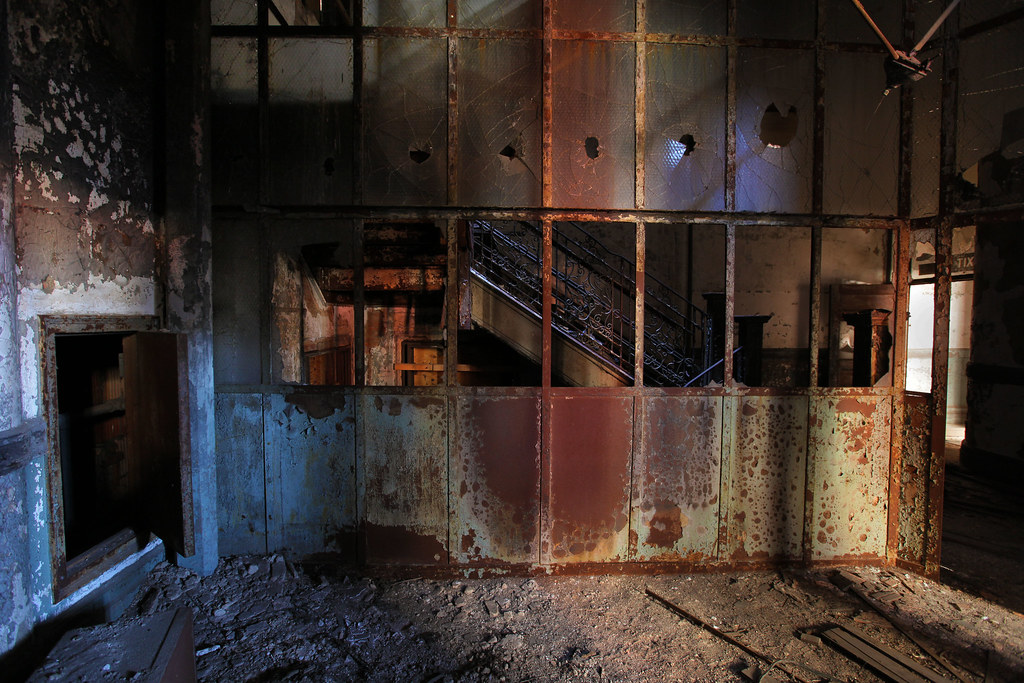
A Rainbow in Harlem.
Inside Fort Totten: Part 1
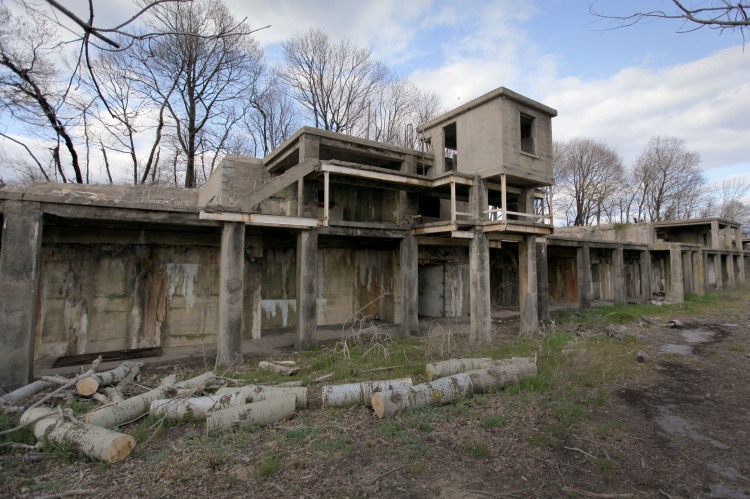
An abandoned battery at Fort Totten
Fort Totten sits on a far-flung peninsula of the Long Island Sound, forming the Northeast corner of Queens. The grounds of this defunct military installation turned underfunded public park are home to over 100 historic buildings representing a series of changes that have taken place over the area’s quiet 200 year history. Unfortunately, the majority of these stuctures have been disused for decades, and many are in a state of progressive collapse. With so much of Fort Totten closed off with caution tape, overtaken with vines, or hidden beneath rusty fences, it makes for an unconventional park, but a fascinating place to wander.
An 1829 farmhouse predating the land’s military use crumbles behind a weedy barricade; out front, a prominent sign bears the inscription: “Please Excuse My Appearance, I am a Candidate for Historical Preservation.” It’s an image that typifies the current state of affairs in the Fort Totten Historic District.
On the northern tip of Willet’s Point, a monumental granite fortification constructed during the Civil War as a key component of the defense of the New York Harbor sits unoccupied, though it’s used as a haunted house on occasion. Clustered on the rest of the grounds, dozens of dilapidated Romanesque Revival and Queen Anne Style officers’ quarters, hospitals, bakeries, movie theatres, and laboratories vie for restoration, but so far the funding has failed to materialize.

The Willet Farmhouse, Fort Totten’s oldest structure, and one of the most at risk.
One such building, a two-story YMCA facility built in 1926, has been abandoned for close to 20 years, but much of what’s left behind lies undisturbed. On a bulletin board in an upstairs landing, a 1995 thank-you letter from a kindergarten class at PS 201 hangs by a crude depiction of Santa Claus, both lovingly dedicated to an Officer Rivera. Steps away, in a rotting book room, an incongruous stash of 80s porno magazines.
Most recently used as a community relations unit of the New York City Police Department, the building is cluttered with mattresses, discarded packaging, and unopened toy donations. The New York City Fire Department, which now operates training facilities in a renovation abutting the hospital building, currently uses the attached gymnasium as a storage space. The basement was filled with rusted-through shelving and ruined equipment, flooded and too dark to shoot.

An overgrown pit in a World War I battery.
On the other side of the peninsula, a series of concrete batteries sit half-submerged in plant life. These were constructed at the turn of the century, but by 1938, they were declared obsolete and subsequently abandoned. The boxy design looks like modern architecture to me, but the battery reveals its true age in other ways.
Pencil-thin stalactites ornament the ceiling wherever the rain gets in, suspended over a crank-operated machine designed to lift heavy weaponry a century ago. The network of maze-like tunnels feature arched hallways with metal doors, winding staircases, and yawning pits, all fit for a dungeon. Guards stationed at the fort were laid off in 2009, and it was unclear on my visit if the area was open to the public or not. A rusty barrier, more hole than fence, didn’t keep out a couple of high school kids, but offered a spot for them to park their bikes.
When the military base changed hands in 2005 and became an official New York City Park, Bloomberg predicted that Fort Totten was “certain to become one of New York’s most popular parks.” Some community members feared that the estimated 450,000 yearly visitors would disrupt parking, increase crime, and change the face of the neighborhood, but ten years later, tourism has yet to pose a problem.
Fort Totten hasn’t lived up to its potential just yet, but the progress that has been made gives hope for improvements to come. The park now offers regular events and educational programs to draw visitors and enrich the surrounding community. Several nonprofit groups have occupied and renovated the decrepit buildings, including the landmarked Officers’ Club, which now serves the Bayside Historical Society as an educational facility and exhibition and event space. These are small but significant victories in the effort to save the historic legacy of a little-known plot that could be the crown jewel of Queens parkland.
(Though in some cases, it may be too little, too late. One look inside the profoundly decayed Fort Totten Army Hospital, in Part 2 of this post, will assure you of that.)
-Will Ellis
Related Links:
- Fort Totten Historic District Designation Report
- Fort Totten History from the Bayside Historical Society
- NYTimes 1999 “Fort Totten’s Old Houses are Tottering”
- NYTimes 2003 “Nearer to a Fort Totten Park but Not to a Consensus”
- Scouting NY—A Snowy Day at Fort Totten

This obscure Queens park doubles as a ghost town.
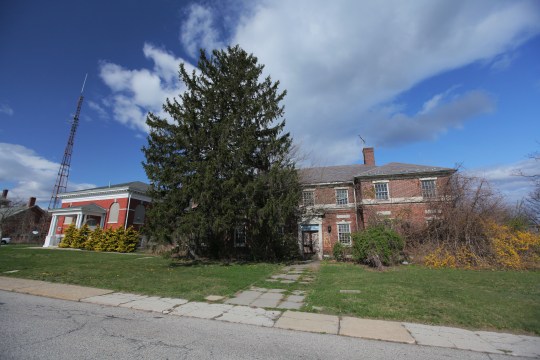
The YMCA building partially obscured by monstrous vegetation. On the left, a new renovation.

Inside, a rusty scale abandoned in the lobby.

An emptied snack bar once served concessions at sporting events and amateur theatre.

A community kitchenette still held pots, pans, and complete place settings.

A bulletin board on the second floor that hadn’t been updated in 17 years.

This room must have provided temporary housing to minors. The floor was littered with clothing and old English projects.

In the opposite corner, a derelict dollhouse. If I had been in the Twilight Zone, I’d have found a miniature me in there.

The remains of a rotting book room, which also housed a store of nudie magazines.

Through the library, a crumbling projection room overlooking the YMCA gymnatorium.

Daylight spills onto the practical planes of an underground battery.

Other areas had vaulted ceilings and arched double doors.

The interiors were almost completely empty, except for a dusting of dirt and leaf litter.

Some rooms held a few remnants…

Like this one: 100-year-old machinery in a dark Fort Totten nook.
Houdini’s Grave, in NYC’s Spookiest Cemetery
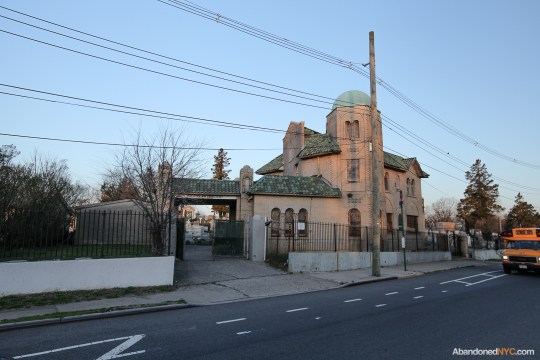
Are we in Queens or Salem’s Lot?
If you pass by a graveyard on the Jackie Robinson Parkway, don’t hold your breath. You’ve got two and half miles of Queens’ Cemetery Belt ahead of you, a burial ground so vast it’s supposedly visible from space. Surrounded on all sides by an ocean of headstones, the modest Machpelah Cemetery makes up only a small fraction of the sprawling necropolis, but its arguably the creepiest graveyard in the city…
Cramped centenarian tombstones muster in rows on the hilly plot—the place is rundown and deserted, but one grave is consistently well-maintained. It’s the monument of Machpelah’s most famous resident, master escape artist Harry Houdini. Only steps from the headstone lurks an eerie cemetery office, abandoned since the late 80s. The cemetery is a dream destination for graveyard ghouls on a chilly October night, especially since Halloween marks the anniversary of Houdini’s untimely death.
The history of the Cemetery Belt can be traced back to the Rural Cemeteries Act of 1847, under which cemeteries became a legitimate commercial enterprise for the first time in New York. Non-profit organizations were authorized to buy up land and sell plots to individuals, replacing the traditional practice of burying the deceased in churchyards and private property.

Conditions at Bayside-Acacia are still less than ideal.
Areas of then-rural Queens quickly became concentrated with new cemetery holdings. A stipulation of the act limited the acreage of land an organization could purchase in a given county, but church groups and land speculators got around this by buying up neighboring plots on the Brooklyn-Queens border, forming the region now known as the Cemetery Belt.
Between 1832 and 1849, a series of cholera outbreaks thoroughly exhausted Manhattan’s remaining burial sites. The common belief at the time was that ground water could become contaminated with the disease when infected corpses were exposed to the soil. As a result, all burials were prohibited on the island of Manhattan in 1852.
As the population swelled, new developments, including the Brooklyn Bridge, often required the displacement of grave sites. Manhattan started evicting its dead people, and sending them to western Queens—tens of thousands of deceased were disinterred and transported to mass graves in the Cemetery Belt. These ghoulish dealings were kept away from the public eye, often carried out in the dead of night.
Today, Queens’ five million “permanent residents” almost triple its living population, but their numbers are at a standstill. Most of these cemeteries reached capacity long ago, leaving many without a source of income. As a result, some have fallen into disrepair, with officials failing to provide the “perpetual care” their patrons are rightfully owed.
At the nearby Bayside Cemetery, conditions were downright shameful, and hair-raising—exposed human remains were identified at several of the overgrown grave sites. Community pressure, litigation, and the effort of volunteers have gotten the place cleaned up, albeit in a cursory fashion. Gaping mausoleums have been closed off with cinderblocks and boards.
At Machpelah, the plots are untidy, but not nearly as egregious as the Bayside grounds. The cemetery’s decline is most apparent in its ramshackle office building. The boarded-up structure is dilapidated now, but its architecture, dating to 1928, continues to impress on the surface.
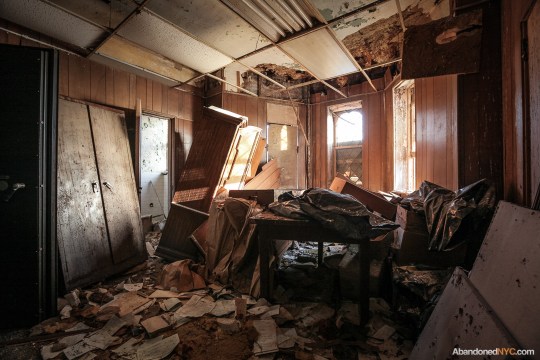
Burial records litter the floor of the Machpelah Cemetery office.
Any semblance of grandeur breaks down on the inside. The striking arched windows visible in the facade are installed in rectangular frames, and their diamond panes are all artifice. The skeleton of a drop ceiling hangs askew, with most panels collapsed and reduced to a yellow paste that covers the ground. The office has apparently fallen victim to vandals over the years, furniture and safe deposit boxes have been ransacked, old burial records lie scattered in the grime. Anything of value has been removed, but a coin bank souvenir from the 1939 New York World’s Fair remains, its most recent deposits dating back to 1988.
“Stuffy” doesn’t begin to describe its suffocating ether. Reception rooms are boxed in with cheap wood paneling, which combines with the dizzying funk of mildew to evoke the interior of a coffin. Secluded in a cockeyed armoire, Nosferatu could feel right at home here.
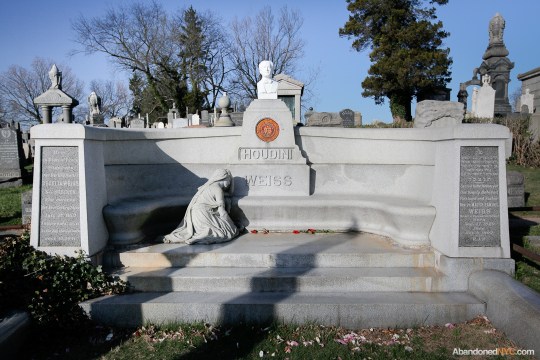
Red roses wilt on Houdini’s grave.
Every Halloween, hundreds of devotees make the yearly pilgrimage to Houdini’s final resting place to pay their respects, party, and make an offering—around the anniversary of his death, pumpkins, broomsticks, and playing cards mount like a cairn on his headstone.
The Society of American Magicians, for which Houdini served as president until his death, was the official caretaker of the site until recently. Between 1975 and 1993, the bust that adorns the Houdini monument was stolen or destroyed four times—it’s thought to be the only graven image in any Jewish Cemetery.
For many years, the likeness was only brought out for yearly ceremonies, but in 2011, a group of magicians from the Scranton Houdini Museum engaged in some guerrilla restoration, installing a new bust with the blessing of Houdini’s family. The group has since taken over responsibilities for the site’s care, and so far the monument remains unscathed.
With no funds to reoccupy, renovate, or demolish the old office building, its likely to stand until it falls down on its own; the same can’t be said of Houdini’s shiny new effigy. Odds are he’ll lose his head again—even though it’s screwed on. So next time you’re traveling down that graveyard highway, be sure to stop by for a look while you can. There’s no need to wait for the witching hour. At Machpelah Cemetery, the gate is always open, and every day is Halloween.
UPDATE: The office was demolished on August 21st, 2013.
-Will Ellis
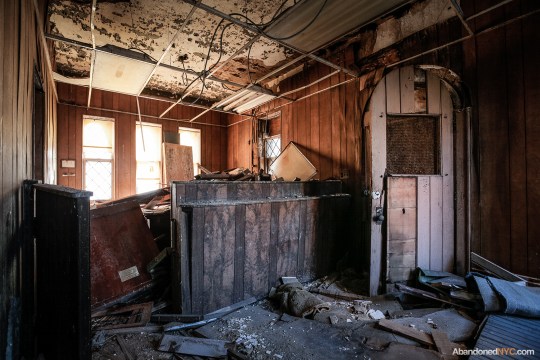
The lobby, with a distinctive arched doorway, bathed in golden morning light.
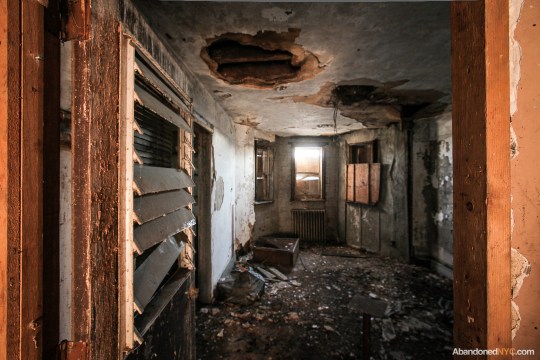
The second floor.
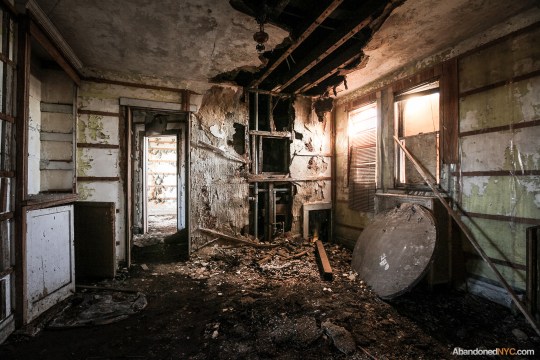
Valuable copper pipes were removed from the upstairs.
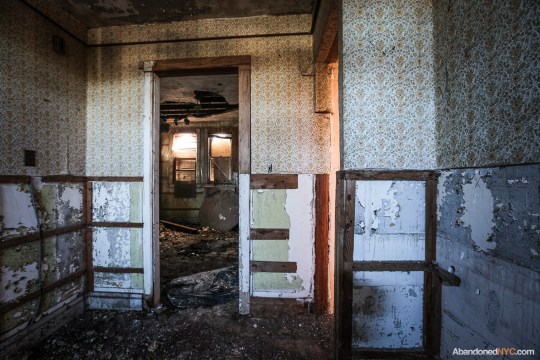
Several rooms feature vintage wallpaper, but wood paneling had been removed.
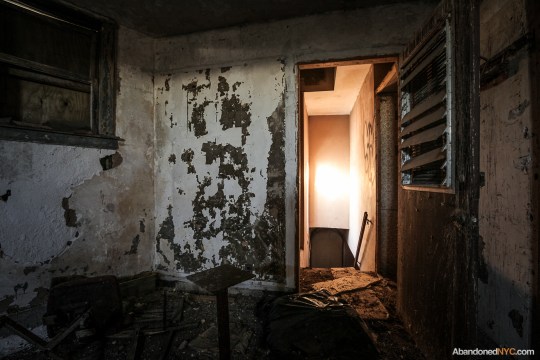
Sunlight illuminates a stairwell.
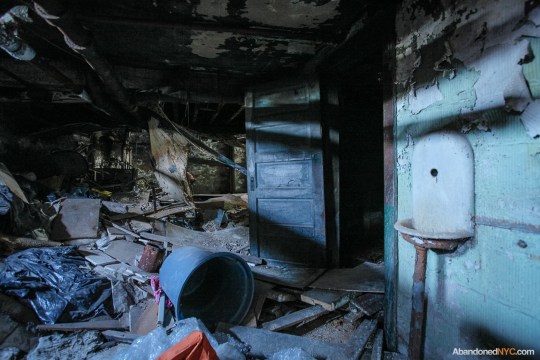
A forbidding basement. The structure could only be accessed through a narrow opening that led to this room.
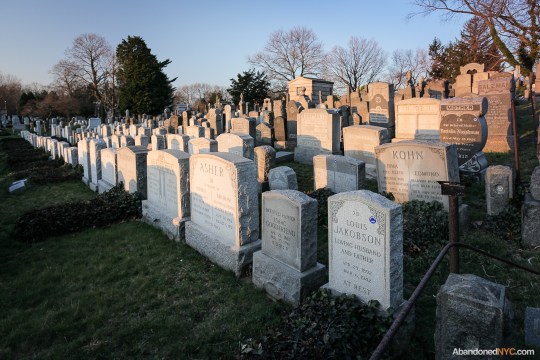
No vacancy.
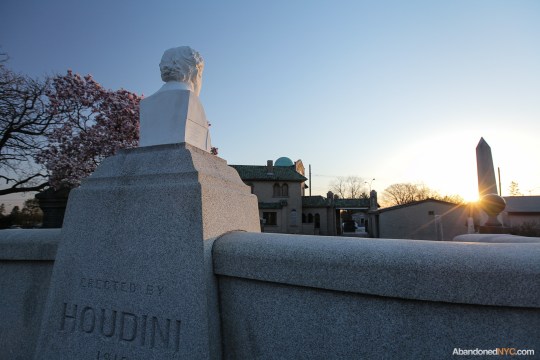
Dawn breaks on Houdini’s grave.
Inside Creedmoor State Hospital’s Building 25

The first glimpse of Building 25’s fourth floor from the central stairwell. That’s not gravel.
In Queens Village, mere inches of brick and mortar separate the world we know from one of the strangest places in the city. Once a haven for New York’s cast-out mentally ill, Creedmoor Psychiatric Center’s Building 25 has undergone something of a transformation over its 40 years of neglect.
Creedmoor was founded in 1912 as the Farm Colony of Brooklyn State Hospital, one of hundreds of similar psychiatric wards established at the turn of the century to house and rehabilitate those who were ill equipped to function on their own. Rejected by mainstream society, hundreds of thousands of mentally disturbed individuals, many afflicted with psychosis and schizophrenia, were transferred from urban centers across the country to outlying pastoral areas where fresh air, closeness to nature, and the healing power of work was thought to be their best bet for rehabilitation.

A few articles of clothing were left behind.
As the 20th century progressed, asylums across the country became overrun with patients, and many institutions became desperately understaffed and dangerously underfunded. Living conditions at some psychiatric wards grew dire—patient abuse and neglect was not uncommon. Creedmoor State Hospital was habitually under scrutiny during this period, beginning in the 1940s with an outbreak of dysentery that resulted from unsanitary living conditions in the wards.
The hospital had spiraled completely out of control by 1974 when the state ordered an inquiry into an outbreak of crime on the Creedmoor campus. Within 20 months, three rapes were reported, 22 assaults, 52 fires, 130 burglaries, six instances of suicide, a shooting, a riot, and an attempted murder, prompting an investigation into all downstate mental hospitals. As late as 1984, the violent ward of Creedmoor Psychiatric Center was rocked with scandal following the death of a patient, who had been struck in the throat by a staff member while restrained in a straitjacket.
In the late 20th Century, the development of antipsychotic medications and new standards of treatment for the mentally ill accelerated a trend toward deinstitutionalization. A series of dramatic budget cuts and dwindling patient populations led to the closing of farm colonies across the United States, and a marked decline at Creedmoor. The campus continues to operate today, housing only a few hundred patients and providing outpatient services, leaving its turbulent past behind. Many of the buildings have been sold off to new tenants. Others, like Building 25, lie fallow.
The building was an active ward until some time in the 1970s, and retains many mementos from its days as a residence and treatment center for the mentally ill. With peeling paint, dusty furniture, and dark corridors, the lower floors are typical of a long-abandoned hospital, but upstairs, the effect of time has taken a grotesque turn.
The smell alone is enough to drive anyone to the verge of madness, but the visual is even more appalling. For 40 years, generations of pigeons have defecated on the fourth floor of Building 25, far removed from their dim-witted dealings with the human world, assembling a monument all their own. Guano accumulates in grey mounds under popular roosts, with the tallest columns reaching several feet in height. Like the myriad formations of a cavern, Buiding 25’s guano stalagmites are a work in progress—pigeons roost at every turn, and they’re awfully dubious of outsiders. Violent outbursts of flight punctuate an otherworldly soundscape of low, rumbling coos. The filth acts as an acoustic insulator, making every movement impossibly close.
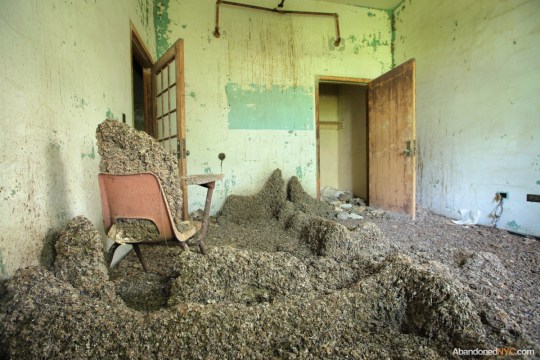
These dropping formations formed under the pipes of a sprinkler system the birds frequented. (Prints Available)
Two levels down and a world away from the top floor, a kitchen is filled with years’ worth of garbage intersected by narrow pathways. A living room, kept relatively tidy, features a sitting area with an array of chairs, including a homemade toilet. Loosely organized objects litter every surface—toiletries, clothing, hundreds of dead D batteries. Some of the belongings looked as if they hadn’t been touched for decades, but a newspaper dated to only a few weeks before confirmed my suspicion that someone was still living here.
I found him snoozing peacefully in a light-filled dayroom, surrounded by a series of patient murals. Once painted over, images of faraway lands, country gardens, and the Holy Mother are coming to light again as time peels back the layers. The image was surprising, unforgettably human, and imprudent to photograph. Declining to introduce myself, I passed once more through the dark, decaying halls of Building 25, leaving its charms, horrors, and mysteries for the birds. Back on solid ground, its impression wouldn’t fade for months—Building 25 has a way of recurring in dreams…

Overgrowth covered most of the windows, casting green light over much of the interior.
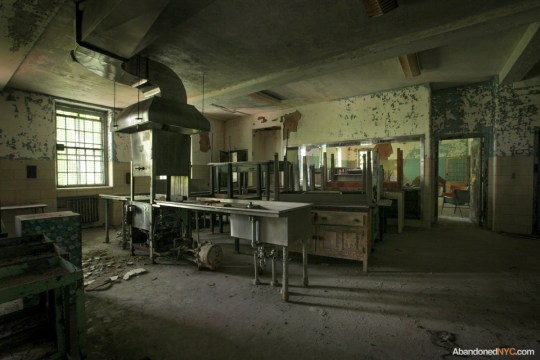
Furniture stacked in a cafeteria on Building 25’s third floor.
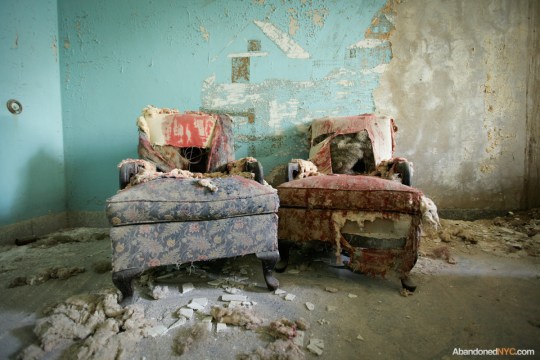
These chairs are popular with urban explorers, one went as far as covering the upholstery with fake blood.
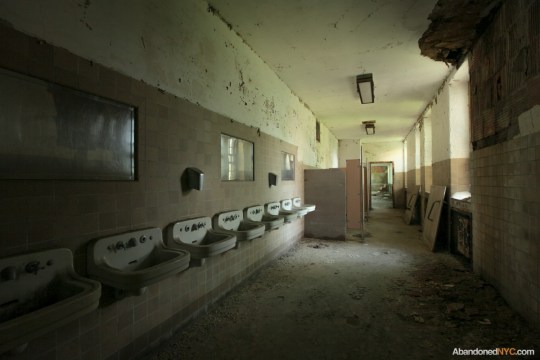
Metallic sheets are bolted to this bathroom wall in lieu of mirrors, which patients could use as a weapon.
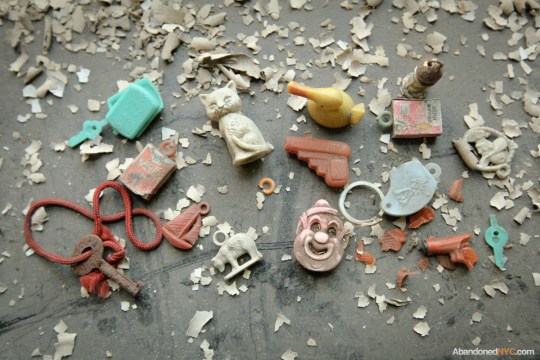
A tiny toy collection arranged on a windowsill. (Prints Available)

Even in the 70s, this equipment was outdated, and left behind.

Did this mural prophesy the current condition of the top floor?

An uninviting hallway on Creedmoor’s fourth floor.
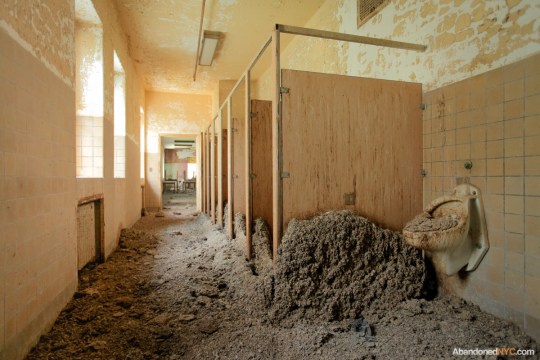
This bathroom held the largest volume of fecal matter. (Prints Available)

The guano gives some rooms the look of an indoor desert.

Anyone for musical chairs?
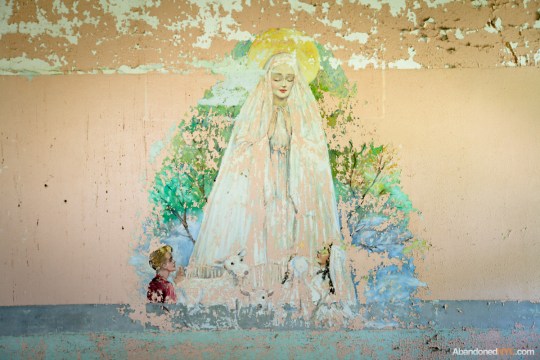
An incongruous Virgin emerges from an infested day room. (Prints Available)

A glimpse at the Creedmoor squat.
The Harlem Renaissance Ballroom
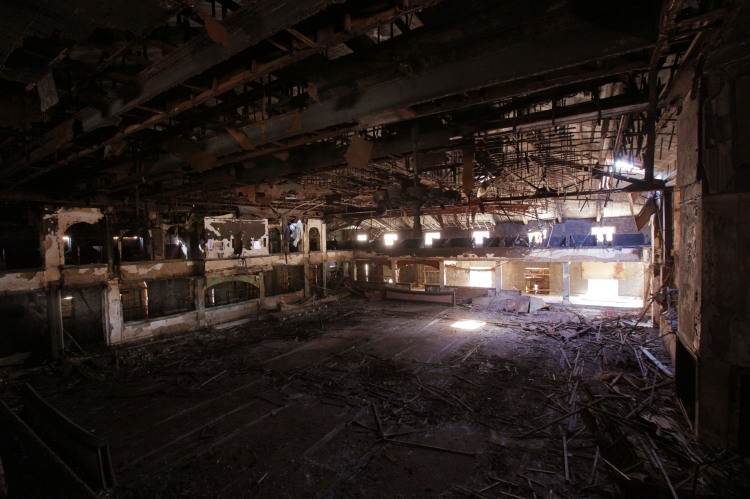
Inside The Harlem Renaissance Ballroom
The dance floor of the Harlem Renaissance Ballroom sprouts mushrooms today, but 80 years ago it quaked with the frenzied rhythms of the Lindy Hop.
The Ballroom was completed in 1924 as part of a larger entertainment hub that included a bustling casino and 900-seat theatre. Built and operated by black businessmen, the “Rennie” was the only upscale reception hall available to African Americans at the time. Prize fights, concerts, dance marathons, film screenings, and stage acts were held at the Renaissance, along with elegant parties and meetings of the most influential social clubs and political organizations in Harlem. The community’s elite gathered to dance the Charleston and the Black Bottom to live entertainment by the most renowned jazz musicians of the age.
The nightspot even played host to the nation’s first all-black professional basketball team, also called the Harlem Renaissance, considered by some to be the best in the world in their day. On game nights, portable hoops were erected on the dance floor, converting the ballroom into a stadium. Following each game, almost invariably a victory for the Rens, a dance was held where players would mingle and jive with the choicest ladies of Harlem. The team barnstormed in towns across the country, playing exhibition games in which coveted matches with white teams drew the largest crowds. In their best season, the Renns set a record with 88 consecutive wins that has yet to be broken.

View of the ballroom’s ruined interior from the bandstand.
A year before construction on the ballroom was completed, the institution that would one day demolish the Renaissance Casino moved in next door. The Abyssinian Baptist Church was once the largest Protestant congregation in the country, and continues to prosper today, both as a religious institution and a driving force of change in the surrounding neighborhood. Established in 1989, its nonprofit arm, the Abyssinian Development Corporation, has invested over $500 million in community development, becoming the most influential social service and housing provider in Harlem.
The corporation currently rents all of its 1,200 units of housing to low-income families, is responsible for constructing Harlem’s first new high school in 50 years, and has attracted numerous supermarkets, department stores, and national retail chains to aid in the development of the neighborhood. Despite their success, Abyssinian’s dealings have brought controversy in recent years. Many of their low-income tenants accuse the organization of neglect, pointing to hundreds of standing violations in their residential buildings. Their vision of the “New Harlem” seems at odds with some long-term community members, who call their “progress” gentrification.
The ADC purchased the Renaissance property in 1991 with plans to renovate the site back to its historical role as a social hall and community space. In the intervening years, they introduced a new plan that diverges sharply from their traditional housing ventures. While a portion of the property will be utilized as a community center, only 20% of the residential units will be “affordable,” the rest of the 19-story construction will be set aside for luxury condominiums. In a Times quote, Executive Director Sheena Wright cites the necessity of bringing “diverse income levels” to the neighborhood as justification for the project; she asserts, convincingly, that “one should not relegate Harlem to housing just for the poor.”
The first stage of development involves the demolition of the theatre structure. Plans call for the preservation of the ballroom’s facade, but the interior is coming down. The project almost hit a roadblock in 2006 when the structure was pegged for a Landmarks Commission review, but the ADC exerted its political muscle to block the designation, enlisting big name supporters like former Mayor Dave Dinkins, Manhattan Borough President Scott Stringer, and the New York Landmarks Conservancy to voice their opposition. In the five years that have passed since the ADC overcame this obstacle, a bleak economic climate has forced them to put the project on hold. Abyssinian is currently pursuing investors for the project.

A spotlight falls on the ballroom once again.
The site of the former theatre is now an empty lot harboring a few disused construction vehicles, but contrary to some reports, the Renaissance Ballroom still stands, for now.
Most of the windows are boarded up, but light finds its way through a caved-in ceiling, exposing the diaphanous remnants of a golden age—colored light bulbs still lodged in the nightclub’s chandeliers, seat numbers pinned in the balcony. Ghostly images of jazz singers and blasting trombones barely cling to the proscenium of the ballroom’s weathered stage, once graced by Duke Ellington, Count Basie, and Ella Fitzgerald. The sense of history here is palpable, and the deterioration absolute. Reduced to mulch, the dance floor supports a thriving green fungal colony. Little points to the existence of a casino on the lower floor, but a coatroom remains largely intact. The rest gives the impression of a war zone—feral cats tread freely over piles of rubble that once delineated rooms. It’s easy to see why Spike Lee used this location as a nightmare crack den in Jungle Fever.
Langston Hughes had the Rennie in mind when he described “a golden girl, in a golden gown, in a melody night, in Harlem town.” It’s been decades since the “mellow magic of dancing sound” has reverberated here, but the Ballroom remains significant through its connection to the cultural and intellectual movement it nurtured.

The floor of the ballroom was significantly decayed.

One of the larger mushroom patches.

Can you spot the face beaming on these faded signs?

Box seats in the balcony of the Harlem Renaissance Ballroom.

Another view from the stage.

Walls collapse in the downstairs lobby.

A dark hallway on the first floor.

The Coat Room
Inside The Domino Sugar Refinery
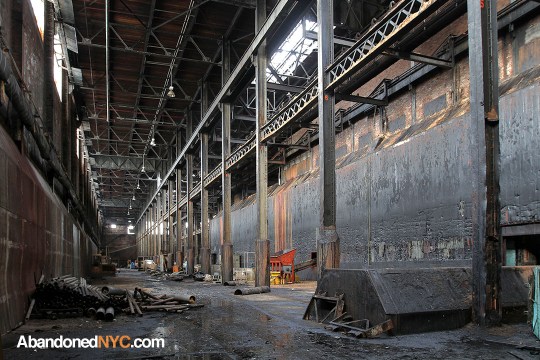
Inside the abandoned Domino Sugar Refinery’s cavernous raw sugar warehouse.
Situated on an eleven-acre parcel of waterfront in the shadow of the Williamsburg Bridge, the derelict Domino Sugar Refinery remains one of the most recognized monuments of Brooklyn’s rapidly disappearing industrial past. Now, after a decade of false starts, new plans for a modern, mixed use megacomplex may put an end to the decaying colossus that was once the largest refinery in the world, marking the final passage of a working-class Williamsburg.
In the late 19th century, Brooklyn was responsible for over half of the country’s sugar production, with Havemeyers & Elders Sugar Company leading the pack of over 20 major refineries that called the borough home. The factory’s signature building—a towering redbrick structure that still stands today—was constructed in 1884 to replace an older sugarhouse that had been destroyed in a catastrophic fire. Three years later, 17 of the largest sugar refiners in the U.S. merged to form the Sugar Refineries Co. Trust, later reorganized as the American Sugar Refining Co., and branded as Domino Sugar in 1902. Domino and its predecessors operated on the waterfront for a total of 148 years; at its peak, the site employed over 5,000 workers, capable of producing over three million pounds of processed sugar a day.

The American Sugar Refinery Processing House shown after its completion in the 1880s.
With the growing use of high fructose corn syrup and artificial sweeteners came a steady decline in demand for old-fashioned cane sugar. Production at the Williamsburg plant ended in the early 2000s with partial packaging operations lingering until 2004. The non-profit Community Preservation Corporation purchased the Domino site the same year for $58 million. Their plan would preserve and renovate the central refinery building, landmarked in 2007, and raise a battalion of architecturally offensive residential high-rises in the footprint of the surrounding industrial complex, razing the Raw Sugar Warehouse, constructed in 1927, and the Packaging House, a 1962 addition, in the process.

The old “New Domino” complex.
Two Trees teamed up with noted NYC firm SHoP Architects—the group is already leaving a lasting impression on the city landscape with the Barclay’s Center and the East River Esplanade. Unveiled Friday, their monumental plans seem tailor-made to appease the new population of Williamsburg, without limiting profits.
The plan is similar in scope to the vision of the CPC, with several key improvements. The buildings rise higher—up to 60 stories—to allow for more park space, including a one-acre “Domino Square,” where builders envision film screenings and outdoor concerts. Some of the structures include open spaces and sky bridges, an innovative solution sought to preserve harbor views for the inland community. The landmarked refinery building would be preserved and converted to office space, and several pieces of machinery would be salvaged for inclusion in a public “artifact walk.” In the face of such monumental changes, this may be of some consolation to New York nostalgics.

The new rendering.
Developers are working with the YMCA to establish a community space on the site, and are also proposing a new public school. Street level retail would favor independent business over chain store tenants. Two Trees also intends to deliver on the previous developer’s promise of 660 units of “affordable” housing, though the condition was never legally binding.
With all these benefits, Two Trees is attempting to pacify a community that is weary of change, and concerned for its future. The Domino development marks a clear and dramatic manifestation of a contentious transition that’s been taking place in Williamsburg for the last decade. The area is well known today as an infamous haven for hipster youth, but 10 years ago the neighborhood was a quiet, working-class community of Jewish, eastern European, and Hispanic immigrants. Now, it won’t be long before the tattooed and the trendy are priced out, leaving room for only the wealthiest New Yorkers. Emerging across formerly affordable areas of Manhattan and Brooklyn, the familiar pattern is destined to change the face of our city. Call it progress or gentrification. Praise the plans, or lament the loss, there’s no stopping the reckless growth of New York City.
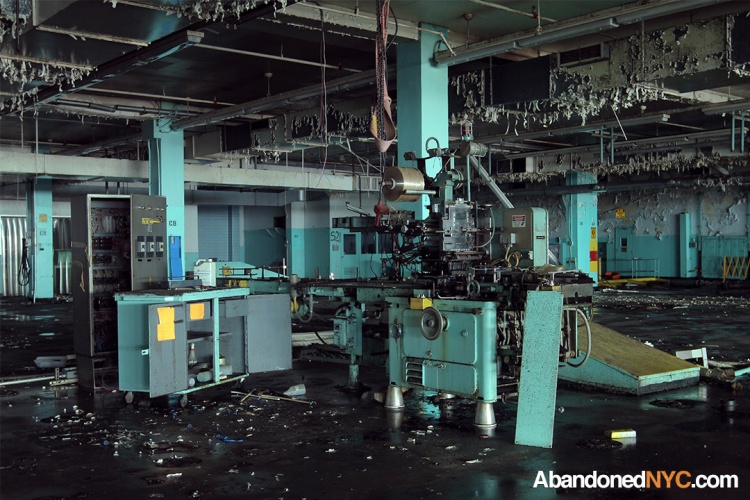
Eerie interiors of the abandoned packaging plant.
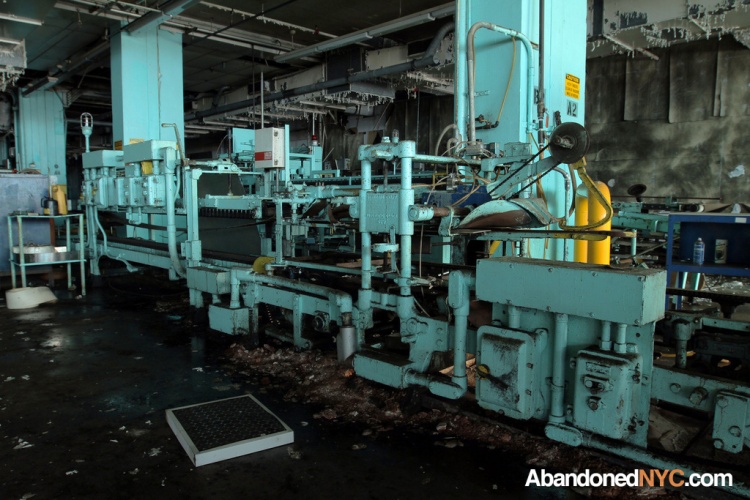
In its final moments, the Domino Sugar Refinery slips further into a speedy decay, introducing an element of the exotic to an already unfamiliar environment. Some of the alien interiors are coated with shallow puddles of tar, or dark sugar byproducts rendered the consistency of glue, or apple crisp. Others take on the appearance of an Egyptian temple in the impenetrable darkness, with row upon row of columns supporting the chasm of a vacant warehouse. Tinged aquamarine, the peeling factory floors of the packaging plant might be confused for the barnacled mechanisms of a sunken ship. The complex is unnervingly immense, presenting a seemingly endless series of floors connected by lightless, labyrinthine staircases. Alone in a factory that once employed thousands, up against its unfathomable depths, it felt like being in the belly of the whale—it didn’t take a miracle to get me out of there.
The next time you ride down the FDR or traverse the Williamsburg Bridge, take a good look at the sprawling industrial giant that was the Domino Sugar Refinery; it won’t be long before it’s preened and polished into the marketably modern new New Domino—another of the city’s rough edges, smoothed over in favor of gleaming glass.
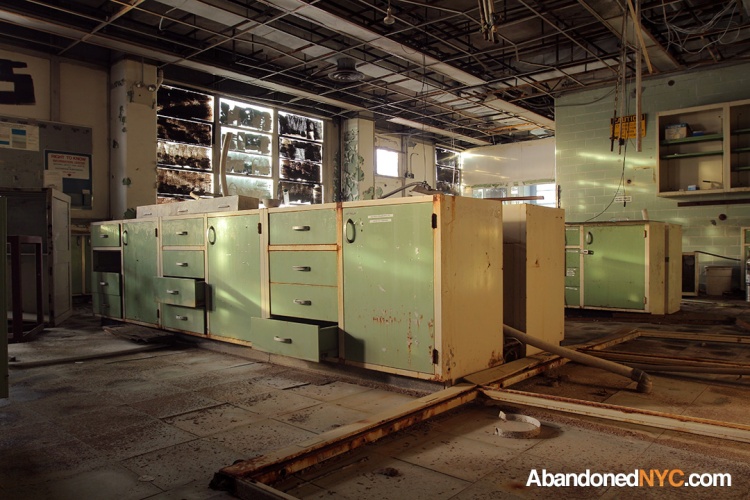
A storage room in the soon to be demolished packaging house.
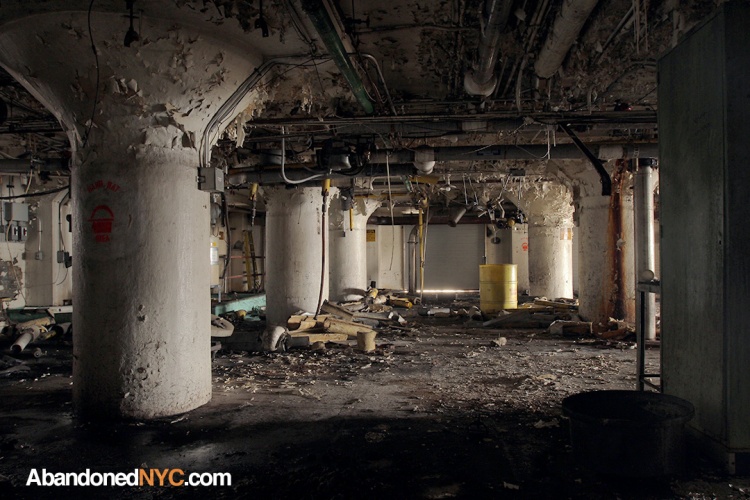
A dilapidated loading bay in the Domino Sugar Refinery.
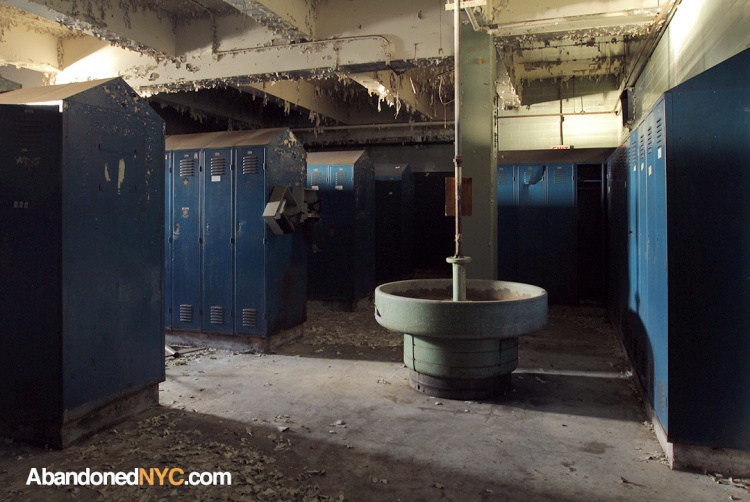
This locker room looked like something out of a horror movie.
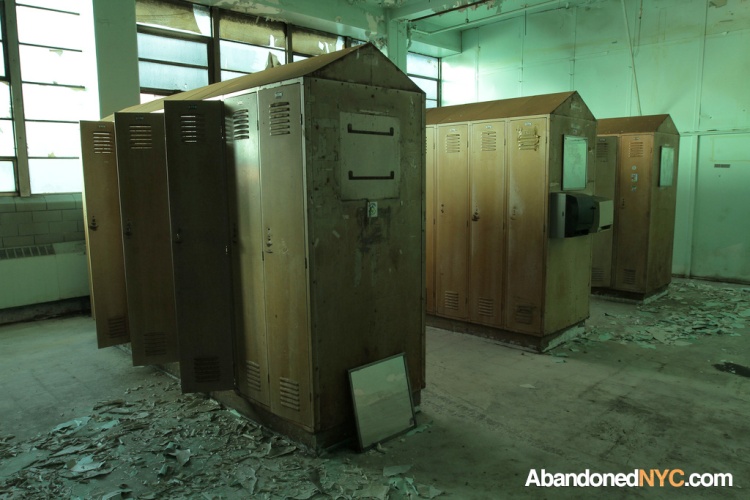
A smaller (women’s?) locker room.
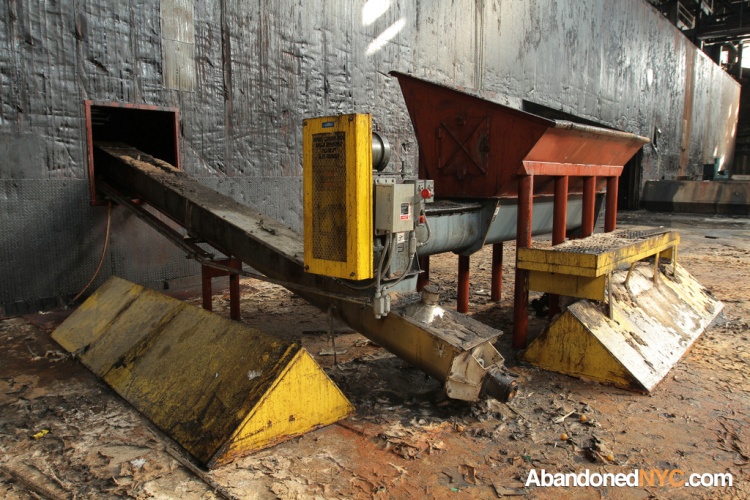
Machinery in the colossal Raw Sugar Warehouse.
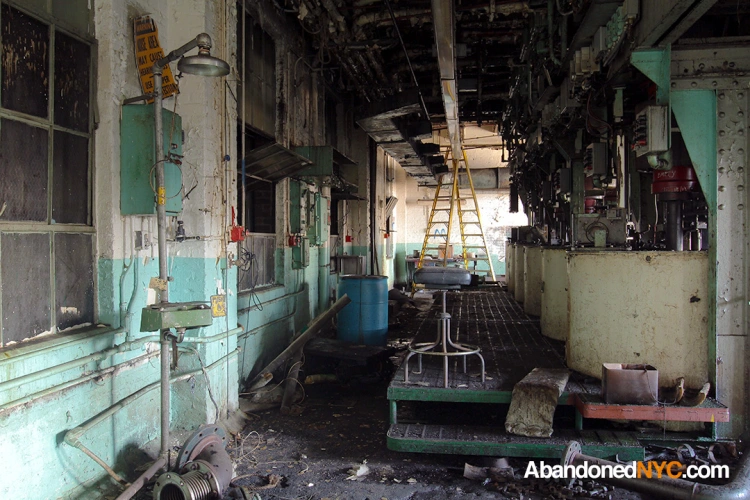
An eyewash station.

The factory interior.
Another view of the packaging plant.
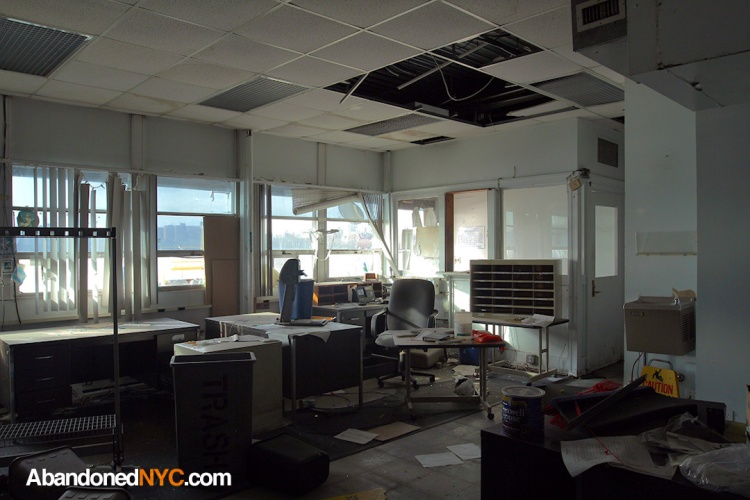
An emptied office overlooking the East River.
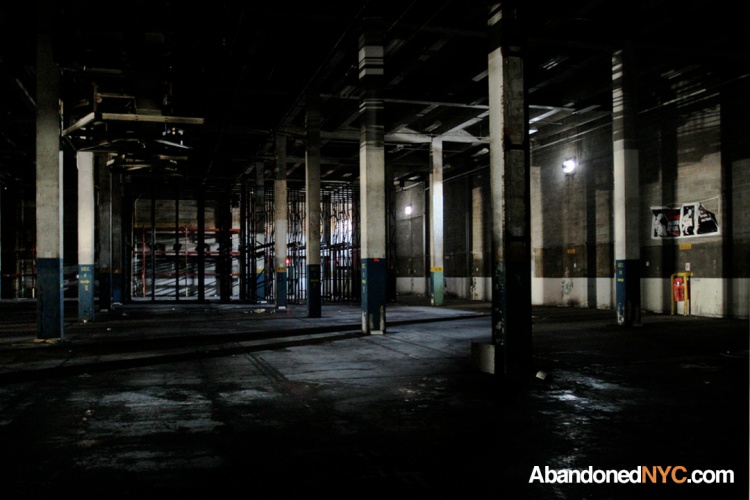
This warehouse was pitch black to the naked eye.
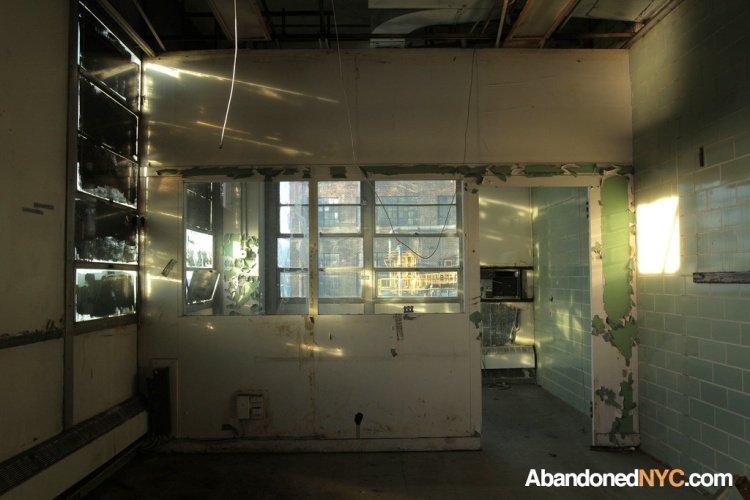
Evening light streaks through a painted window.
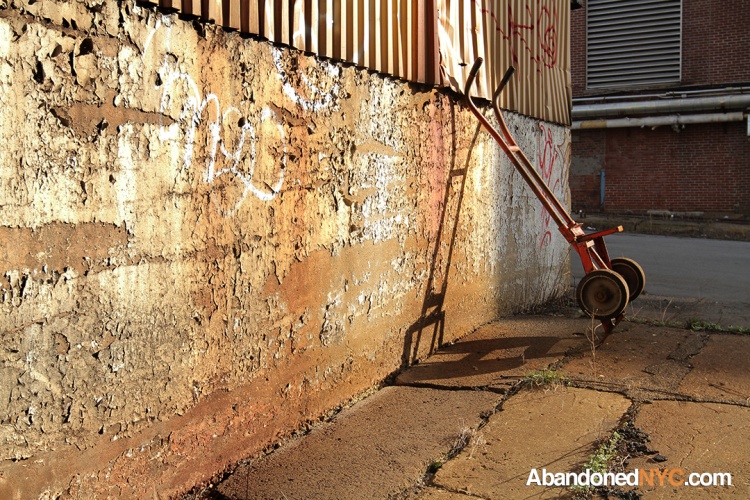
This handtruck might have sat untouched for a decade.
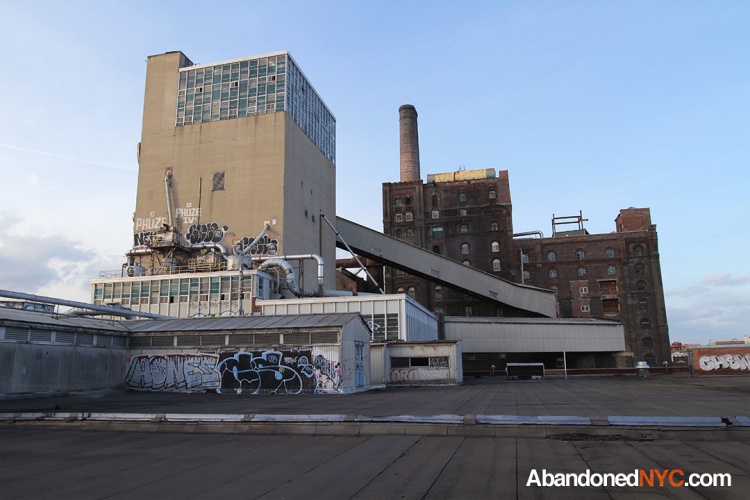
A view of the complex from the roof of the packaging plant.
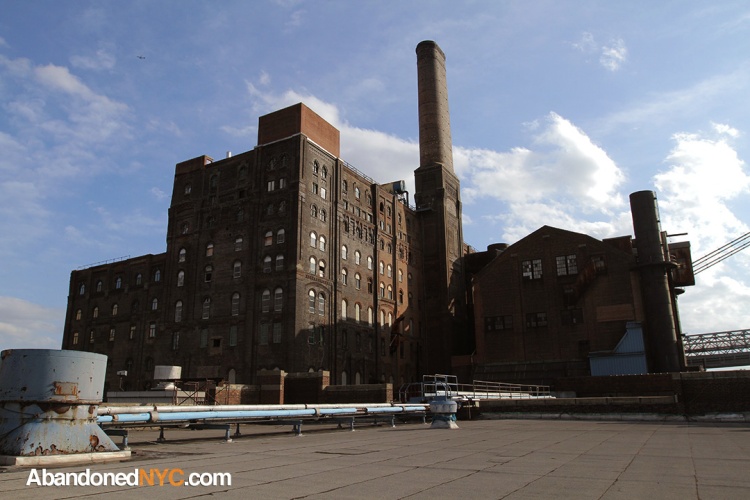
The landmarked refinery building as it stands today.
Bayley Seton Hospital: Part II

Flooded Hall.
I wasn’t able to track down any information on the function of this obscure outbuilding of the Bayley Seton Hospital complex in Stapleton, SI. The austere, three-story edifice is the only abandoned structure within the active section of Bayley Seton, situated on the northeast corner of the grounds behind the main building. The rest are fenced off and awaiting demolition after being sold to make way for a new development—it’s likely that this building may hang on for a bit longer.
For a detailed history of Bayley Seton Hospital, refer to my last post on the Nurses’ Residence.
If you have any information on this building, please enlighten me in the comments below.
- 2009 SI Live Article—”Salvation Army Finalizes Deal…”
- Photoessay by Nathan Kensinger on BSH’s Victim Services building
- Wikipedia entry on Bayley Seton Hospital

My favorite room in Bayley Seton Hospital.

Another view of the Utility Room. This door fell out of the wall when I tried to open it.

Evening light penetrates a dark hallway.

A crumbling passageway.

The floor of this room was covered with a rank, pulpy, mush—apparently the remains of ceiling panels that had gone to rot.

Glass block windows installed on the first floor.

One of several pieces of furniture remaining in the building.

A toilet with a strange weighted contraption.

An examination chair tucked away in the stairwell.

Graffiti in the building was minimal, but this bit stood out.

The building at sunset, just before a security guard asked me to leave…
Top Posts & Pages


 AbandonedNYC